As much as we might like to think of ourselves as historically minded, much of our material past survives accidentally. Objects often endure not because generations carefully preserved them, but because they were forgotten in attics and barns. Others are saved because their value lies in continued usefulness—or in the possibility of being repurposed for an entirely different function.
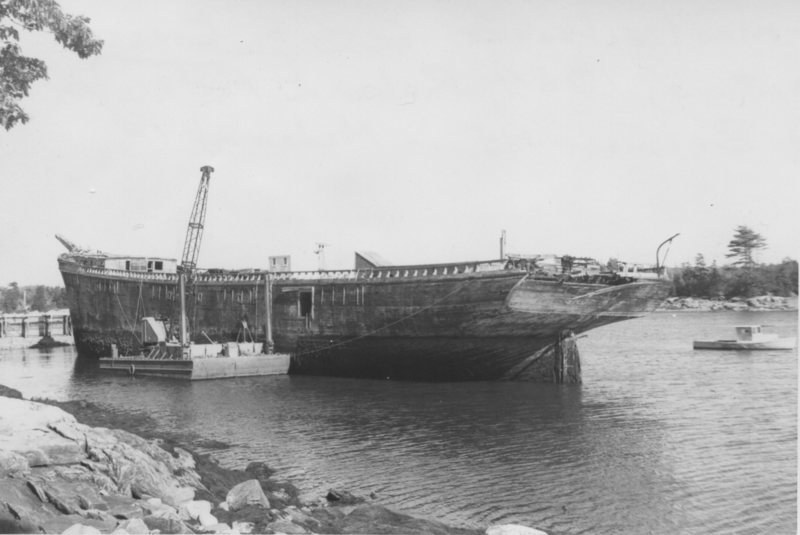
The story of the schooner Cora F. Cressy follows this pattern of unintended preservation. Today the largest surviving wooden sailing vessel hulk, its longevity is the result of not one but two dramatic reinventions.
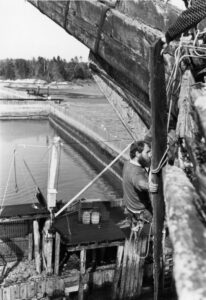
Built in 1902, the Cressy was one of 41 four- to six-masted schooners constructed by Percy & Small in Bath primarily for the coastal coal trade. The aftermath of World War I saw the continued replacement of wooden vessels by steel ships, and schooners like the Cora F. Cressy sat languishing in New England harbors. Most were scuttled or scrapped. The Cressy, instead, was transformed into a floating nightclub and restaurant known as Levaggi’s Showboat in 1929. She made appearances in Boston, Providence, and New Haven and was rumored to operate as a speakeasy.
Several years later, bank-owned and deteriorating in Boston Harbor, the schooner caught the attention of Bremen, Maine, lobster dealer Bernard Zahn. In 1938, Zahn purchased the vessel for $200, envisioning yet another adaptation. Towed to Maine, the 273-foot schooner proved difficult to maneuver into an inlet at the entrance of the Medomak River. Zahn intended to use her as both a lobster pound and a breakwater, storing lobsters to stabilize supply during seasonal fluctuations. The plan ultimately failed—the schooner’s ‘tween decks left insufficient headroom to work from a skiff inside the hold—and Zahn returned to more conventional lobster pounds.
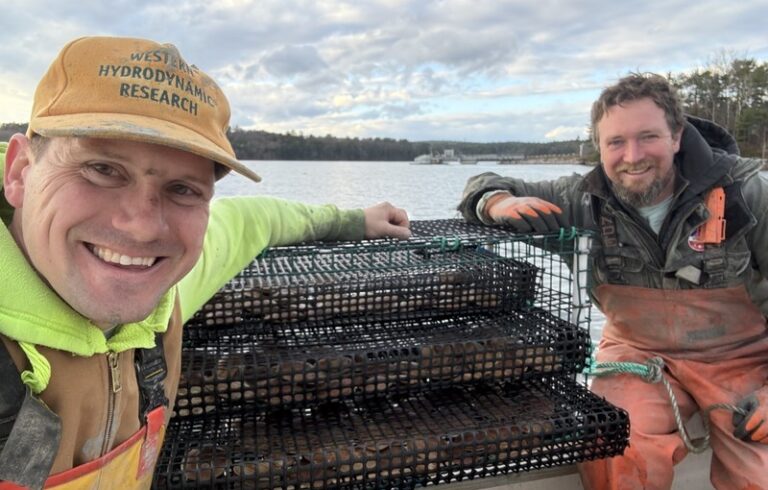
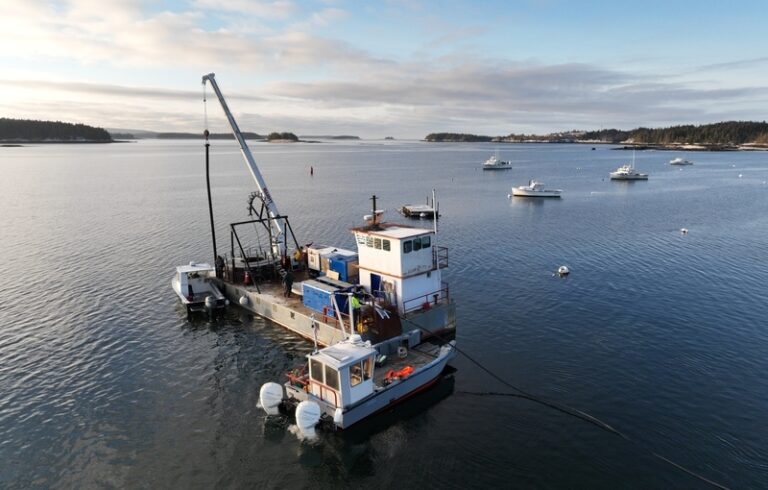
Despite this failure, the vessel has found purpose. The Cressy has remained in that spot ever since, effectively serving as a breakwater. Over time, her hull has collapsed inward and the site continues be part of a working waterfront landscape. The lobster pounds are now used for oyster farming—one product is aptly named the “Cora Cressy oyster.”
This unintentionally preserved hulk has resulted in a rare maritime heritage relic. The schooner has become an important source of data on early 20th century shipbuilding, particularly for Maine Maritime Museum, steward of the Percy & Small shipyard site where it was built. Museum staff have documented the hull in detail, recreated plans and specifications, and salvaged significant artifacts for the collection, including decorative interior paneling, steering gear, bollards, deck railing, and carved elements. The trailboard carving is currently on view in the museum lobby, providing visitors with a sense of the grand scale of the Great Schooners.
Kelly Page is curator of collections at Maine Maritime Museum. Explore resources and plan your visit at www.mainemaritimemuseum.org.