A Midcoast aquaculture startup wants to spawn a new way to cultivate Atlantic sea scallops and, in the process, create a lucrative source of supplemental income for Maine fishermen.
Seascale is the brainchild of aquaculture veteran Charlie Walsh of Thomaston and lobster boat sternman Jon Steuber of Tenants Harbor.
Today, nearly all locally caught sea scallops are scooped up by draggers, with a much smaller percentage harvested by divers.
About half the scallops Americans consume are farm-raised imports from Asia, and a few small operations in Maine waters have also begun to emulate the highly labor-intensive, suspended-line aquaculture techniques long practiced in Japan.
Seascale hopes to augment Maine’s almost $9 million wild caught fishery with scallops raised on the sea floor. The cofounders have applied for a provisional patent on their Maine Scallop Pot and have been working with researchers and fishermen to test the gear and establish best practices for growing scallops in the cold, deep waters of the Gulf of Maine.
Rather than trying to lure a new cadre of scallop farmers, Seascale’s vision is to create a viable complementary source of income for the 5,000 lobstermen who already ply the waters of the Maine coast.
“The working waterfront won’t exist in the future if we don’t take care of the people who are fishing now,” says Walsh, whose resume includes roles harvesting seaweed at Maine Sea Farms, bivalves at Pemaquid Oyster, and eel at American Unagi, as well as a stint managing University of Maine’s experimental hatchery. “All of the hopes people have for aquaculture are pinned around fishermen still existing, wharfs still existing, and working waterfronts being maintained.”
He says a thriving traditional fishing fleet, especially lobstermen, is critical to keeping the rest of the coastal economy afloat, from bait suppliers, fuel docks, trap mills, rope factories, boatyards, and fiberglass shops to the trucking to bring products to market in big cities.
Key to the pair’s strategy is to make raising scallops a natural extension of a lobsterman’s daily workflow.
“There have been many attempts to bring commercial fishing over to the dark side of aquaculture,” says Steuber, who spends most days on the back of a Port Clyde lobster boat. “We instead brought aquaculture to them in a form factor that sits on the wash rail and is unscary.”
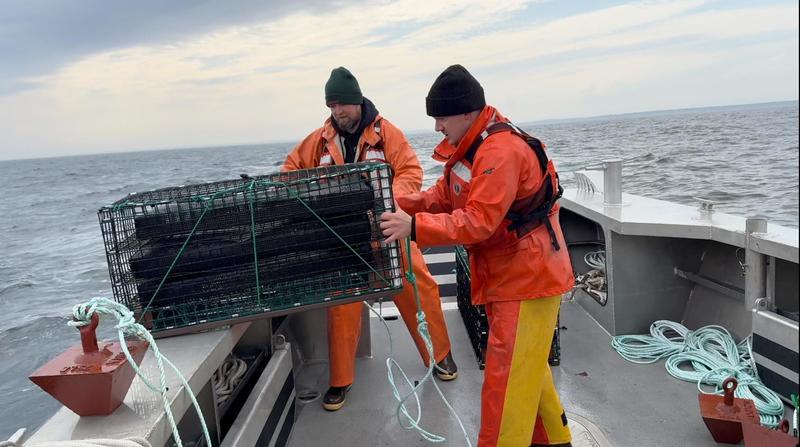
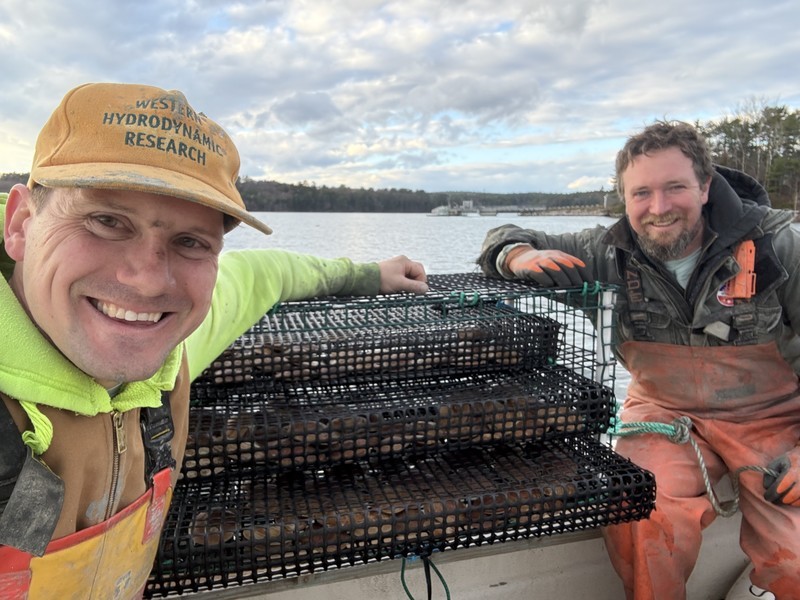
That unscary form factor is a scallop pot that looks and feels a lot like a lobster trap.
Working out of Walsh’s unheated, uninsulated barn, with a long extension cord run from the kitchen, the pair prototyped a scallop pot that mimics a lobster trap in dimensions, weight, and ease of handling.
“When you live up here, you take a lobster trap for granted,” Walsh says, “but it’s 200 years of iteration—something that in size and weight one person can handle. They stack. You can cast them over the side of the boat and they land right-side up.”
Recognizing that fishermen already have full-time jobs, Seascale’s “fishing first” ethos envisions a way for harvesters to diversify at relatively low cost. Most fishermen, Walsh says, are open to trying something alongside fishing as long as they don’t have to add expensive equipment or change the configuration of their boats. Given its similarity to a lobster trap, the Maine Scallop Pot requires little change to the workflow of a typical lobster boat crew.
Seascale’s vision is also to match the scalability of lobstering so that someone can choose how much of their business to devote to scallops, testing the waters with 10 pots or investing in a much bigger plunge. Earnings from growing scallops could help make a boat payment in a lean lobstering year or be set aside for a new truck fund.
Lobstermen face an array of challenges, from federal rules to protect right whales to offshore wind development to the gentrification that is gobbling up working waterfronts, not to mention shifts in the distribution of the stocks they’re fishing as a result of a rapidly warming Gulf of Maine.
Against that backdrop, lobstermen have no choice but to consider opportunities to diversify, says Sebastian Belle, executive director of the Maine Aquaculture Association.
“We’ve seen that in aquaculture—a lot of lobstermen dabbling on the side to see whether it’s worth it or not and see if they can make a little money. Over time, the interest will increase,” predicts Belle, who serves on the board of the Island Institute which publishes The Working Waterfront.
Another driver of interest in raising scallops may be the state of the wild fishery. In January, the Maine Department of Marine Resources ordered emergency closures of six of the state’s scallop harvest areas, interspersed from Casco to Cobscook bays, “to reduce the risk of unusual damage and imminent depletion of the scallop resource.” That cut short an already compressed fishing window and came in spite of a state policy designed to preserve stocks through rotational closings from one season to the next.
When Walsh and Steuber introduce fishermen to their scallop pot, which sells for $200, there’s little discussion of how the gear works. “They look exactly like a lobster trap,” Steuber says. “You know how many are going to fit on the back of your boat, your trailer. Their questions are: What sort of bottom do they need? How long does it take to grow ‘em? How much can I sell them for? How many scallops fit in a pot?”
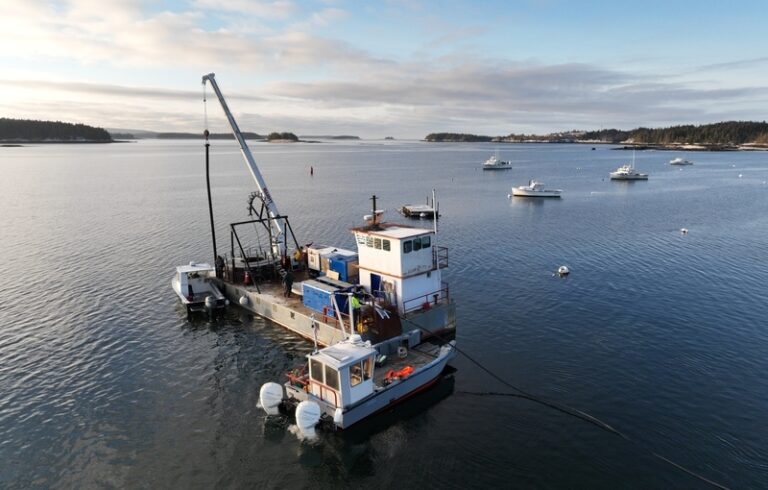
Seascale has worked with fishermen and university researchers to test the gear in Gulf of Maine waters, growing scallops three miles offshore and in the shallows of the Damariscotta River. They’ve determined that the pots perform best sitting on a sand or gravel bottom in deep water—90 to 130 feet. Crucially, those depths are below the zones where most biofouling occurs, meaning pots can be set and left alone for as long as six months before they’re hauled up again.
“We’re not just developing the gear. We’re developing the husbandry manual for how to grow in this gear,” Walsh says. “We feel strongly that if people are going to take the leap and incorporate this into their business, we want to make sure that they have the best information possible.”
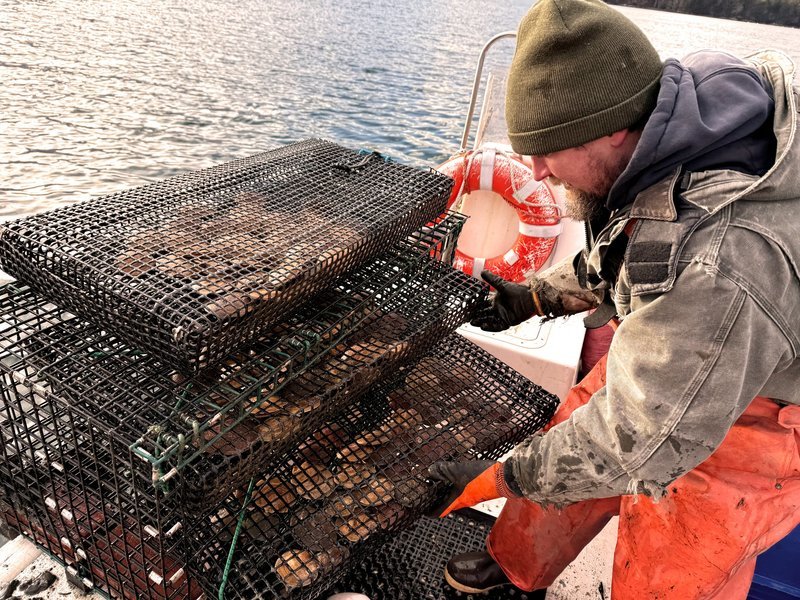
Scallop specialist Michael Coogan, research assistant professor at the University of New Hampshire, is among those who have tested the Seascale gear. “They solved one of the many problems that we were trying to solve,” he says. “There’s still a lot of biology and economics to figure out, but Seascale has figured out a really good option for the engineering and design of the gear. As far as trying to get more people farming scallops, their gear is the best—robust and easy to work with.”
While Seascale’s scallop pot may closely resemble a traditional lobster trap, the regulations governing the two wire boxes are fundamentally different in an important respect.
Fishermen need only a license to drop lobster traps more or less wherever they want, but growing scallops requires an aquaculture permit tied to a geographically fixed lease. Seascale’s path to success will require getting the Legislature to change the way the state regulates the cultivation of sea scallops, essentially giving scallop pots the same mobility that lobster traps have today.
“We envision an aquaculture license with a gear standard and tag system like the lobster fishery operates under,” Steuber says. “Fishermen would be able to shift this gear seasonally and deploy it where their lobster traps aren’t, without having to go to the state and ask for exclusive economic rights in the ocean.”
The Seascale founders realize that pushing through such a bold policy change won’t be possible without muscular support from lobstermen and a willingness to exert their considerable influence in Augusta. Walsh and Steuber have been stressing their complement-not-compete mantra in meetings with lobstermen, legislators, fisheries advocates, and other stakeholders. They hope their grassroots campaign will lead to a bill in the 2027 legislative session.
DMR spokesperson Jeff Nichols declined to comment on a potential new licensing framework, but told The Working Waterfront that “one of the Department’s concerns about this approach is the potential to add vertical lines in the Gulf of Maine at a time when there is significant federal pressure to reduce them in order to lower risk of entanglement to endangered North Atlantic right whales.”
But University of Maine oceanography Professor Damian Brady thinks that Seascale’s approach has merit and may succeed. “The lobster fishing industry is pretty powerful,” he notes. “If it’s a ground-up approach where lobstermen are asking for the flexibility to deploy their gear very similarly to how they lobster, then I think they have a shot.”
Paul Karoff is a Camden-based freelance writer. Until 2024, he was an associate dean at the Harvard School of Engineering and Applied Sciences and previously held senior communications and public affairs positions at nonprofit and higher education organizations and at a Fortune 100 Company.
What TO Read Next...