It’s hard to manage a fishery with little data. It’s hard to collect data with few people.
I attended the Atlantic States Marine Fisheries Commission shrimp fishery meeting in Portland in December. Its goal was to determine the fate of the northern shrimp fishery, and besides the depressing news of another year of no Maine shrimp, some themes emerged that are worth discussing.
From my perspective as a marine scientist, 2025 was filled with bad news about the federal government’s de-prioritization of science. The National Marine Fisheries Service, which manages fisheries, lost 545 positions, including 50 in the Northeast. So it wasn’t entirely surprising when I heard at the meeting that we still don’t have access to 2025 spring bottom water temperatures from the Northeast Fisheries Science Center bottom trawl survey—an important metric for potentially re-opening the shrimp fishery. Personnel and budget cuts, combined with the longest government shutdown in history, make it difficult to move forward efficiently.
Fifteen years of rapid warming have taken a toll on cool-water species like northern shrimp, which were already at the southern edge of their range in the Gulf of Maine. The winter shrimp fishery has remained under a moratorium since closing in 2014. But data show that since late 2023, the Gulf of Maine has been cooler at depth. NOAA scientists suggest that circulation changes could continue to temper the warming for some time, although they say more monitoring is needed.
The cooler temperatures brought some hope that shrimp might rebound. However, scientific trawl surveys in 2025 caught record low numbers, and, as the press reported, last winter’s research fishery caught just 70 shrimp.
Now, the moratorium will continue for three more years, and no research fishery will happen in 2026.
But headlines don’t tell the whole story. As we put off another shrimp season, are we also casting aside the people who have the knowledge, gear, and ability to collect current data on temperature and catch: the fishermen themselves?
With an all-out assault on science, why not allow people whose livelihoods depend upon data to go out and collect it?
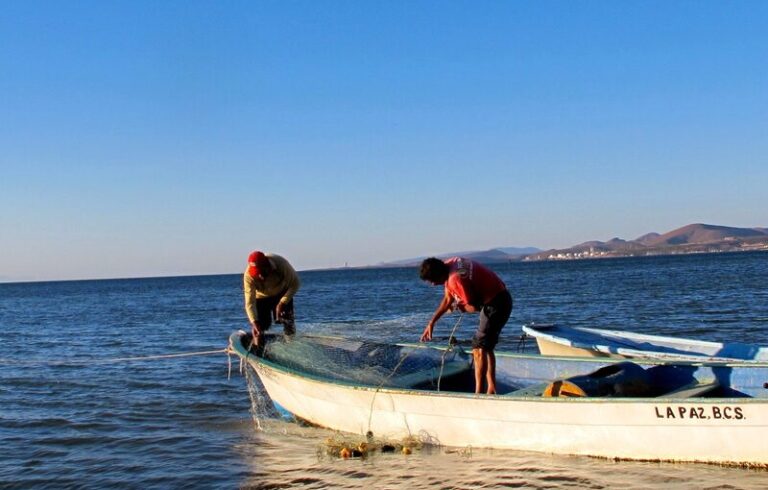
At the meeting, shrimp fishermen were not asking to re-open the fishery, but to improve the data collection, including how the research fishery is conducted. Fishing one day per week, as was the rule in 2025, is not practical or cost-effective for fishermen. It doesn’t allow time to steam to distant areas, stay overnight, and explore. Last year, it resulted in very little fishing and shrimp.
Even when the shrimp fishing was good, Justin Libby, the fisherman assigned the expansive area from Monhegan to Canada, said “timing is important; one week you are catching 2,000 pounds an hour and the next week, you’ll catch a tray. There are a lot of variables.”
Gary Libby, fisherman and chair of the Northern Shrimp Advisory Panel, said he wasn’t confident in the timing of the trawl survey. I’ve heard the same concern from many fishermen about scientific trawl surveys. They’re standardized over time to meet scientific rigor, but if species have moved and the trawls aren’t happening when and where they show up, there are bound to be many zeros.
In May 2025, the northern shrimp management plan was amended to include two environmental indices to guide management, including a temperature trigger. Two out of three years of favorable conditions would trigger a reinstatement of the fishery.
“Overall, we have to stay on top of the science,” Gary Libby stated. “We need more data into the system and having more boats go would give us more data. We need a more robust sampling program, we need more participation to cover more area. We are going to meet the triggers, I don’t have any doubt of that. If this trend keeps up, we are going to meet them for a while. We are asking for a season down the road.”
The shrimp may return. They may not. The zeros may be representative. But excluding a group of experts from conducting research on their own dime does not help us fill data gaps. With reduced federal monitoring of our marine environment, the time is now for saying yes to cooperative research with fishermen.
Correction: An earlier version of this piece misstated which survey would provide 2025 spring bottom water temperatures. The survey was the Northeast Fisheries Science Center bottom trawl survey.
Susie Arnold is senior ocean scientist at Island Institute working on the impacts of climate change on marine resources and fisheries-dependent communities. She may be contacted at sarnold@islandinstiute.org.