Buzz is growing about a new restaurant with photos on the wall of Maine and a raw bar that serves oysters from the Pine Tree State, including the occasional oyster from the restaurant’s own aquaculture farm.
Such a restaurant may not seem unique in Bar Harbor or Portland, but it does garner a second look in Austin, Texas.
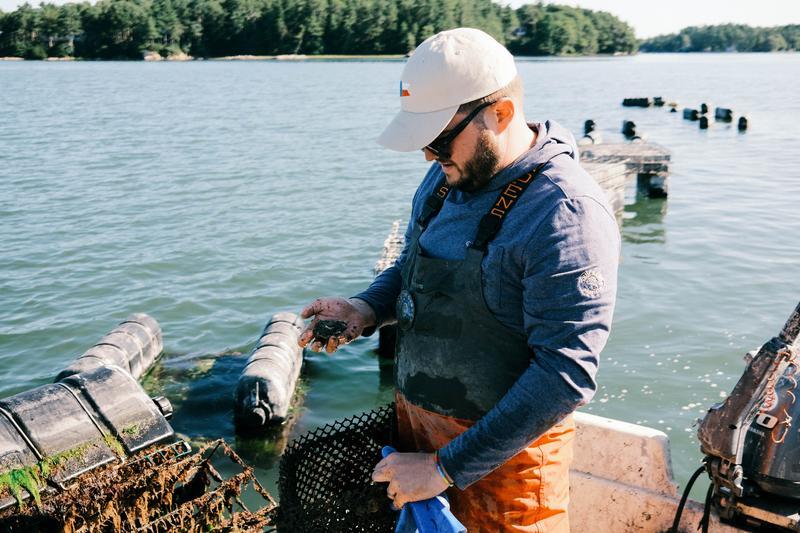
The Austin Oyster Co. opened its first brick-and-mortar location in April in a 1950s-era bungalow in East Austin after hosting pop-up venues and catering at events for several years. The food company exclusively serves oysters shipped from Maine’s coastline, and now offers a smattering of the shellfish grown on its farm, Lone Pine Oyster Ranch in Brunswick, Maine.
Austin Oyster Co. founder Brendan Yancy knows it’s a lot of time and expense to source oysters from Maine for Texas shellfish connoisseurs, but the quality of the product is worth it.
“It’s an amazing product. It’s often overshadowed by lobsters or scallops,” Yancy said. “But I think it’s truly a special, special thing that people in Texas aren’t exposed to quite a lot.”
Yancy is something of an accidental restaurateur and shellfish farm owner.
He and his wife, Kerry, both worked at Expedia in Austin after moving to Texas from New England. Then the pandemic hit, and the two decided to fight the blues of isolation by hosting a socially distanced oyster shucking party for friends.
Kerry Yancy, who is from Maine, had oysters flown from one of their favorite farms for the occasion in May 2020. They posted photos of the party, and the post quickly went viral, with others clamoring for the pair to host a similar outdoor event.
“They’re like, ‘Who’s doing this? How could I order this to my house?’” Yancy said. “And that’s kind of the lightbulb moment where I was like, ‘Oh, I know how to build a website.’”

Once the site went live, reservations were sold out within 10 minutes, leaving Yancy scrambling to fill the orders. Over the next year, the company hired 10 shuckers and hosted up to 10 events a weekend. They would bring the oysters out from Maine via a refrigerated trucking network and air freight.
To supply the oysters, they leaned on Maine friends and family to build out a network of shellfish farmers from which they could buy directly. Yancy would sometimes have to overcome a bit of skepticism at first to make the connections.
“There’s so many farmers that we work with that the relationship was a head-scratch to begin with,” Yancy said. “Once they kind of get what you’re trying to do and how you’re trying to tell their story to new people, it changes.”
At the events, people began asking if the company had a restaurant, and for the longest time Yancy and business partner Drew Ahumada had no answer. A plan was hatched in 2022 to open a restaurant as well as a small-scale oyster farm in Maine.
It turned out that it was easier to start an aquaculture farm in Maine than it was to line up the investors to start a restaurant in Austin.
The Brunswick farm, which opened in 2024, is small in scale, currently producing only enough oysters to supply a restaurant for a week, Yancy said. Until the restaurant opened, he sent the oysters produced to other restaurants to test the product and build up conversation about his venture.
Some shellfish farmers have vertically integrated to serve their products at their own restaurant, said Bob Rheault, executive director of the East Coast Shellfish Growers Association. However, he’s never heard of any growers attempting to do so at such a great distance.
Running an oyster farm and a restaurant at the same time can be extremely labor intensive, but also a great way to add value to the product grown, he said. Growers who combine their product with ecotourism and the possibility of adult beverages may do quite well.
“I wouldn’t say it’s easier to make money as a restaurant, but it does create a certain nexus to monetize,” Rheault said. “The combination, honestly, is a killer.”
In the early days, that’s been the case for Yancy with the Austin Oyster Co. restaurant, which has been very busy.
“I haven’t slept a lot,” Yancy said. “We’d much rather have this problem than maybe some other problems that restaurants face where you’re like, ‘Wait, I’m open, why isn’t anyone here?’”