At a time when many museums are retrenching post-pandemic, the New Bedford Whaling Museum on the south shore of Massachusetts is expanding.
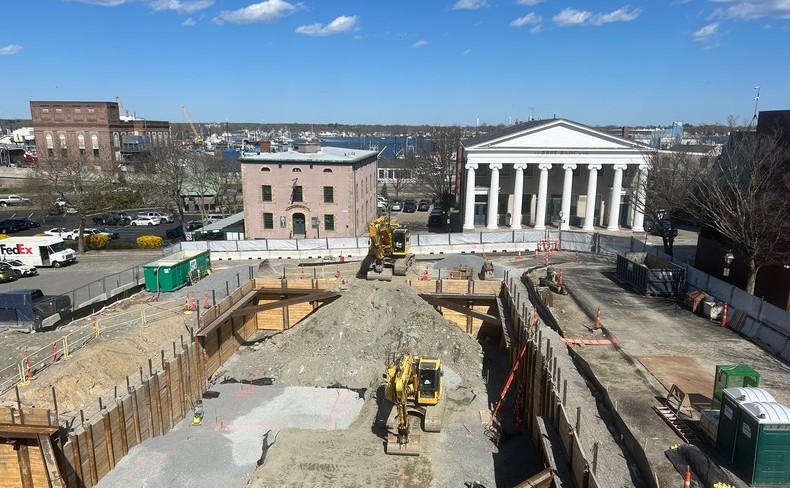
In March, it was announced the museum would receive a $15 million tax-exempt bond from MassDevelopment, a quasi-public state development agency, to fund the creation of a new visitor center and expanded exhibition space. Construction began on the new center in January. The 20,000-square-foot plan, projected to cost $37 million, is targeted for completion in 2027.
The expansion seeks to create a more welcoming and up-to-date space for visitors, and to provide the opportunity to exhibit more of the museum’s 750,000 pieces and traveling exhibitions.
Currently, one of the museum’s most notable pieces, a 1,275-foot-long panoramic painting tracking a 19th century whaling voyage, is only on display off the museum grounds.
Ultimately, New Bedford Whaling Museum CEO Amanda McMullen told The New Bedford Light, the goal is to create the largest and most up-to-date exhibition space in New England south of Boston.
Foot traffic at the museum has recovered more strongly than at some institutions in the wake of COVID, with attendance climbing from some 70,000 annually in 2022 to some 89,000 in 2025, said Annelise Conway, the museum’s chief engagement officer.
“I think people are starting to discover the gem of New Bedford in the south coast,” said Conway. “And we like to think they’re discovering the gem of the Whaling Museum as well, and that we’re not just whaling.”
By contrast, an American Alliance of Museums survey found that 29% of museums in the U.S. had decreased visitation in 2025 compared to the year previous.
Museums which had a diversified revenue stream and strong institutional fundamentals weathered the storm better, said Angie Barry, the founder of AB Museum Consulting LLC.
“The museums that had operating reserves, strong board and staff leadership, and local community support were the most successful,” Barry said in an email interview.
Barry did not work with the whaling museum on this expansion.
The museum, an outgrowth of the work done by the Old Dartmouth Historical Society, focuses on New Bedford’s whaling history, but it also documents maritime history more broadly. It has interactive exhibits about the waves of immigration that powered commercial fishing throughout U.S. history, the art and handicrafts borne from commercial whaling, and the ecology of the Atlantic Ocean and its largest mammal inhabitants. All this is what draws visitors to the museum, said Conway.
Downtown New Bedford, site of where Moby Dick author Herman Melville first set sail on a whaling vessel, has leaned into its history as once being the commercial fishing capital of the world.
It has been aided by the establishment of an urban national park in 1996. The site encompasses 13 city blocks and is managed in partnership with the National Park Service, the city, and downtown institutions, including the whaling museum.
In 2025, the museum began demolition of a vacant building that once housed a local printing company for the expansion. It also created 20,000 square feet of new space for an education center in 2015.
Expansion can carry some risks if not carried out thoughtfully and in an economically sustainable fashion. Conway said much of the museum’s expansion has occurred slowly within existing spaces over the years. Downtown New Bedford has seen high vacancy among business spaces in recent years, providing natural opportunities for expansion.
“I think it’s been the process where [buildings] have been available and we’ve needed the space,” Conway said. “And so it’s been a natural growth and availability process.”
Barry said it’s vital for museums to have a realistic plan for growth, one built on a clear understanding of visitor demand and the resources available. And growth should never be just for growth’s sake, she said.
“Museums should make mission-driven decisions when expanding,” Barry said. “Growth should not just be measured in square footage, but in the increase of diverse narratives and interpretive scope and the focus on fundraising for sustainability.