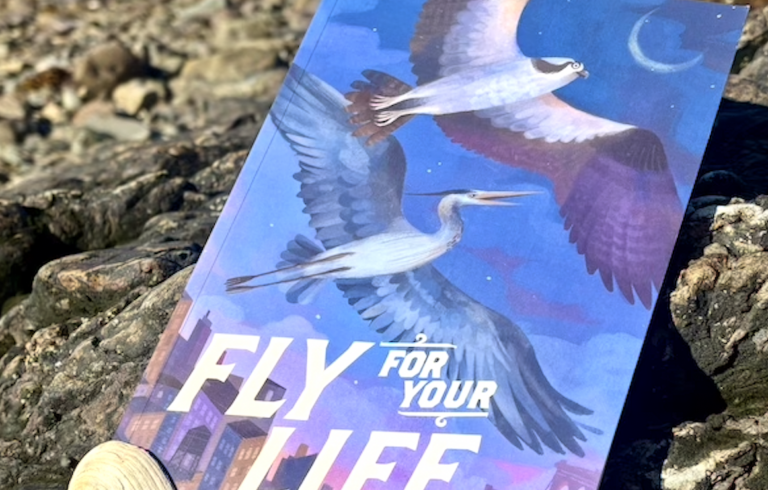
From the Cockpit: Selected Writings by James S. Rockefeller Jr.
From Strut & Axle, Owls Head Transportation Museum Journal 1979-2013 (June 2025)
James S. Rockefeller Jr. (also known as “Pebble”) who died in January was one of the founders (along with Tom Watson Jr. and Steve Lang) of the Owls Head Transportation Museum. Essays by Rockefeller in From the Cockpit: 1979-2013 were selected by his sister Nancy Copp and published as part of the memorial events at the museum in June.
The book’s contents are primarily from Rockefeller’s somewhat folksy, almost familial reports, columns called “From the Cockpit,” with updates about the museum. By 1982, with an expanded readership, the newsletter also grew and became Strut & Axle, a quarterly publication for members, still introduced by Rockefeller.
John Bottero, the museum’s current executive director says of the compilation: “Jim’s writing was able to capture the museum’s gathering momentum with words that others could not express.” His “From the Cockpit” columns “set the tone for each edition, engaging readers from the start. His unique ability to bring out the best in everyone around him was illustrated by inviting others to contribute the articles that filled the pages.”
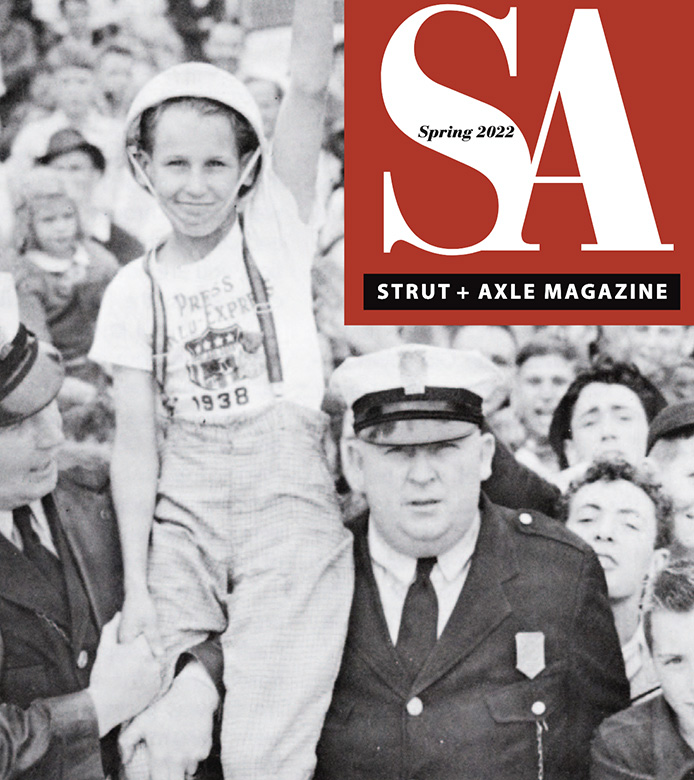
Testimony to the magazine’s excellence, it was awarded a National Association of Automobile Museums award for best magazine in 2019.
“The award underscores Strut & Axle’s essential role in advancing the museum’s mission to educate the public about transportation history,” Bottero wrote.
You might detect in his essays a kindred spirit shared with the highly imaginative children’s book writer Margaret Wise Brown, best known for Goodnight Moon, published in 1947. In 1952, the two met and their whirlwind romance and engagement included time together at Brown’s island house on Vinalhaven.
Shortly after that, Brown visited France on a book tour and died there of an embolism following emergency surgery, while Rockefeller was with his boat in the Caribbean. He afterwards called Maine home, buying a farm in Camden where he had a landing strip and barn for work on planes and antique cars.
A spring 1981 entry describes how the museum would come to life in anticipation of summer’s busyness. In his poetic and playful description, he writes: “Dear Members and Friends: Big news! We have smelled a skunk cabbage, lashed out at a black fly, and caught our first trout. Can summer be far behind? Even that old grump, the Talking T, has contracted spring fever. At his recent start-up, he stated archly, ‘When I talk, children listen.’”
He continued: “The museum is about old things—nice, old, significant things, not just old things for the sake of being antique. Yet ‘oldness’ is only a part of the picture—the smaller part. Looking around this impressive display building now, in the early spring with no one here, everything is quiet and still…. The planes and cars and carriages seem impersonal, a dimension apart from our workaday world. But in the summer, when people are here, when everything is running, when the volunteers come back in force, then you can feel energy flowing into the place. The barrier between man and his inanimate machinery breaks down…
“So the museum isn’t just about old things; it is about … a renewal each year of our love affair with these beautiful vehicles that are both romantic and exciting, yet suggestive of lasting values…”
Rockefeller saw the world as most meaningful when shared. His leadership stood for the benefits of supporting one another and working together. His writing not only celebrates relationships but also contains expert and enticing descriptions of planes and automobiles in the collection, with explanations of their historic claim to fame. Many illustrations, especially photographs, are included.
I think of his writing as love letters to the museum, paying tribute to the volunteers, donors, visitors, and members, the educational collection assembled there, and the skills of assembly and repair on view. Even for an outsider to the subject, there is a contagious enthusiasm and pleasure in the opportunity to learn more about “these old things.”
Copies of From the Cockpit are available for purchase at the Owls Head Transportation Museum, open daily year-round from 10-4, closed some holidays (owlshead.org).
Tina Cohen is a therapist who spends part of the year on Vinalhaven.