A longer version of this piece appeared in the last issue of Commercial Fisheries News, which ceased publication at the end of 2025.
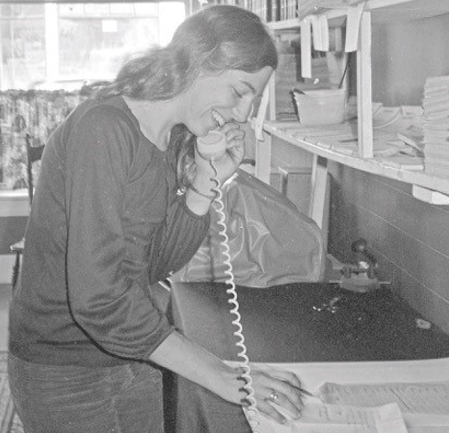
Commercial Fisheries News, the Northeast’s commercial fishing trade newspaper, published its last issue in December 2025. CFN was founded in 1973 in Stonington, Maine, as an idea in my 22-year-old head to create a community of fishermen, scientists, and government people, where the voices of fishermen would be heard, and where the knowledge needed for sensible fisheries decisions could be shared. The paper would bridge differences. Good fisheries policy would make fishing prosper in every small harbor in Maine.
I know now that CFN couldn’t do all those things, or at least not alone. But I was very young.
The news
The paper’s 53-year news span is something to behold.
CFN launched three years before the 200-mile limit, running monthly maps showing hundreds of foreign trawlers fishing off New England. We celebrated when the Magnuson Act passed, and had high hopes that the brand-new New England Fishery Management Council would give fishermen a constructive voice in management. We spent pages and pages trying to make the council system accessible to fishermen, even as it brought quotas and shutdowns.
As federal management came to dominate every fishery in New England, CFN became its paper of record. Fishermen, council members, and even council staff read CFN to learn what had happened during the confusing, multi-day council meetings. Some fishermen were motivated to participate. Others just shook their heads and choked on their language on the radio offshore.
As fisheries changed, CFN reported on the whole package: boats and gear, landings and prices, and management decisions at the state, interstate, and federal levels.
CFN covered booms, and rode them with its advertising. First groundfish, with new nets, trawl doors, electronics, monofilament gillnets, and the conflict over lobster dragging and gear conflict. The start of the innovative Portland Fish Exchange and the fishermen and dealers who stood up to make a transparent marketplace.
In the early 1980s, new, >100-foot steel scallopers in New Bedford fueled CFN’s move to southern New England.
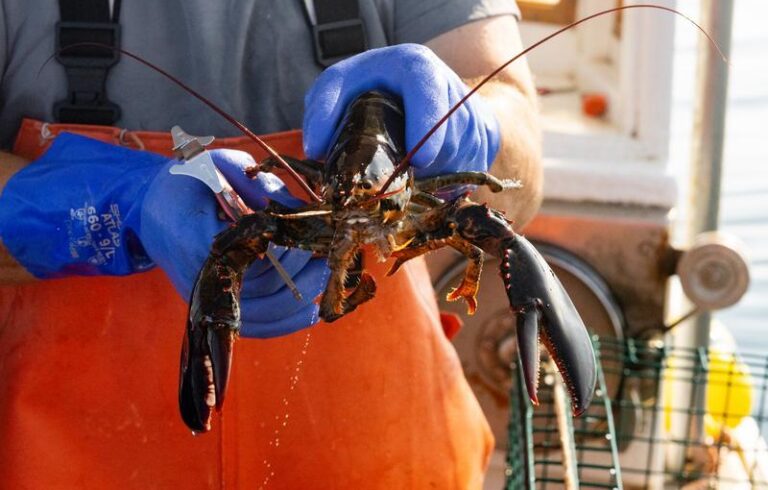
Through the whole 50+ years, the gradual—and then huge—Maine lobster boom. First, in the 1970s, diesels, wire traps, the first electronics, and 30-40-foot fiberglass boats replacing wood. Later came new Maine lobster rules, Atlantic States Marine Fisheries Commission, and the five-fold rise in Maine lobster landings, stunning new electronics, and 40-50-foot boats with big diesels and trap racks.
We created booms: CFN was instrumental in turning a few local lobster boat races into an annual statewide circuit. The paper ran the Maine Fishermen’s Forum for several years and was pivotal to the forum’s trade show.
CFN was there for the epic boom-and-then-bust of the Maine urchin fishery. And the bust-and-then-recovery of the Maine inshore scallop fishery.
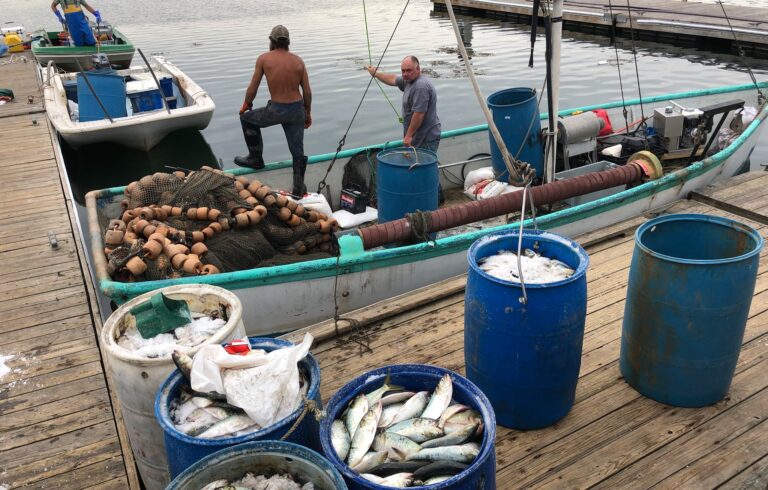
So many busts. The redfish boats that returned for groundfish in the Gulf of Maine and Georges after the U.S.-Canada Hague Line—for a few years—until groundfish collapsed and they left for better fishing in Alaska. Further groundfish collapse, especially in eastern Maine. The collapse of the lobster fishery south of Cape Cod. And herring: CFN’s coverage spanned from publishing annual discharge permits for Maine’s 16 sardine canneries to purse seining and midwater trawling, to the Jeffries stock collapse, and now, bait supplies.
Of course, there was more. Prices: the quahog report from Rhode Island and the lobster price report. An annual big fish issue followed the swordfish and tuna world. Joint ventures with floating processors that started and ended. The mid-Atlantic’s squid, mackerel, and butterfish fisheries with shoreside processing. And, since the 1980s, CFN has covered marine mammal issues—from harbor porpoises and gillnets to right whales and lobster traps.
Through it all, CFN covered boat launchings, engine models, the explosion of electronics, and “Along the Coast” news of boats, people, storms, and tragedies.
In 2015, Rick Martin, then publisher of CFN, faced the realities of the news business brought on by the internet and other forces, and shifted the paper away from fisheries management. Brian Robbins, a writer and former fisherman, stepped forward, and ever since, CFN has been a place to feature new and “reborn” boats, gear, and information about other aspects of being a fisherman, from the “Lobster Doc” to safety to mental health. And always, the people and happenings in the region’s industry.
Parting
I left the paper in 1995 after more than 20 years to become Maine’s commissioner of marine resources. But CFN never left my heart.
Now, in a different sort of parting, I am deeply appreciative of the paper’s life over 53 years; and the dedicated staff, for whom the paper was more a mission than a business. They captured the voices and the stories that made fishing in the Northeast so vibrant, multifaceted and complex, so troubled, and so worth fighting for. They created a community for the creativity, the smarts, and the wisdom of so many in the fishing industry.
Returning, now, to my original vision for CFN. Future fishing communities can only thrive by operating within the bounds of the ever-changing ocean. This is tough, a call for all hands—fishermen, scientists, and yes, government—to drop our defenses, share our knowledge, and think beyond ourselves with courage.
We will always need to listen and learn from each other, with or without CFN.
Robin Alden is founder and former editor and publisher of Commercial Fisheries News. She was commissioner of Marine Resources in the Gov. Angus King administration. She can be reached at robin.alden3@gmail.com.