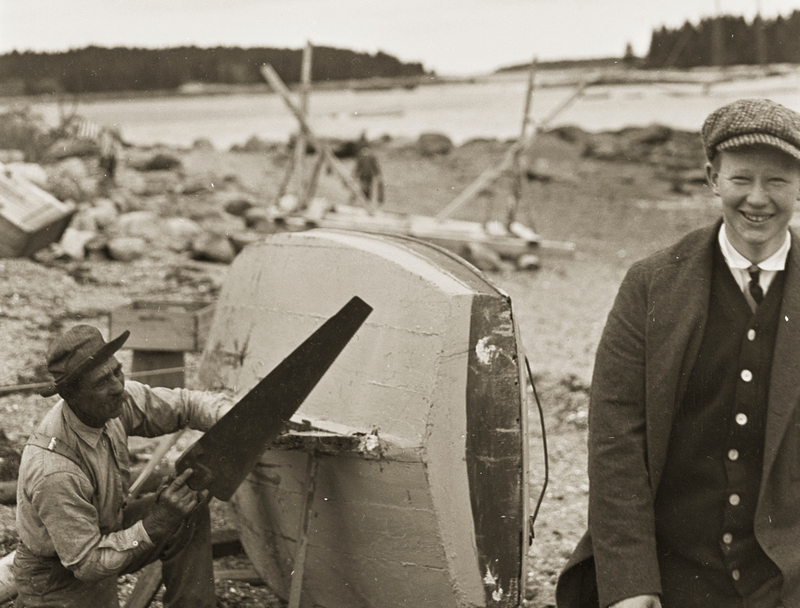
Noah V. Tibbetts uses a handsaw to modify or repair the skeg of a Brutal Beast-type catboat on the beach in Brooklin, Maine, while a young man hams it up for the camera. Chatto Island is in the distance. The year is 1912; Tibbetts is the proprietor of a group of cottages that he rented to summer people, or rusticators, and he needed to be skilled in multiple trades including basic boat building to attend to his client’s needs. The group of cottages was named “Haven,” appropriately, as it was a haven from the pollution, heat, and general business of the big cities. Local lore has the name Haven being given when a post office opened for that section of Brooklin.
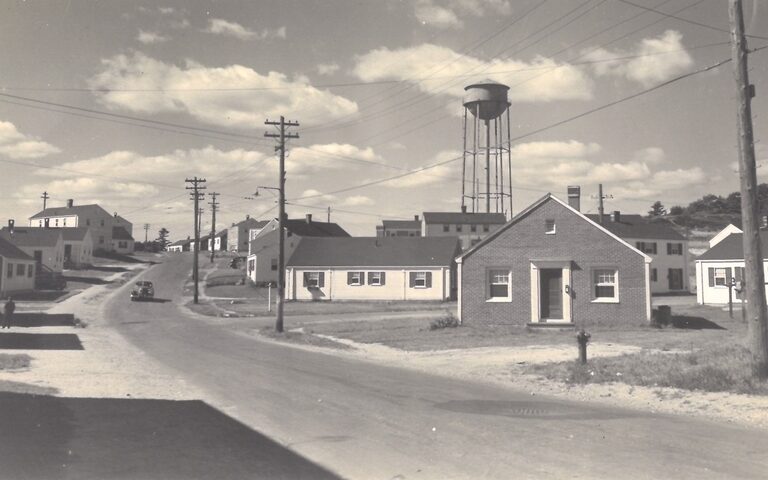
The cottages were modest and the rent was cheap as compared to other rusticator enclaves. Visitors would take the overnight “Boston boats” of the Eastern Steamship Line to Rockland where they would then take a smaller excursion steamer to Haven’s steamboat wharf. The most famous resident was John Wesley Powell, the one-armed geologist who explored the Colorado River through the Grand Canyon in 1869. Most of the renters and then owners were lawyers, teachers, and ministers. The present owners include the descendants of many of the families.
Tibbetts’ profession was not carpentry or any other trade; rather, he was a clerk at the U.S. Patent Office in Washington, a position he held for 48 years. He was born in 1851 in Brooksville. His father, Noah Norman Tibbetts was a sea captain and his grandfather, Capt. John L. Tibbetts, was the first keeper of the Pumpkin Island lighthouse. Though his career was in the nation’s capital, he would return to Brooklin each summer when the government would shut down for a couple of months. Seeing an opportunity to supplement his income, he and his wife, Ida May, started a boarding house with a separate dining hall in the late 1800s for these people from away. Since he worked in Washington it is no small coincidence that his early visitors who became longtime cottage owners came from there. He died in Brooklin in January 1942.
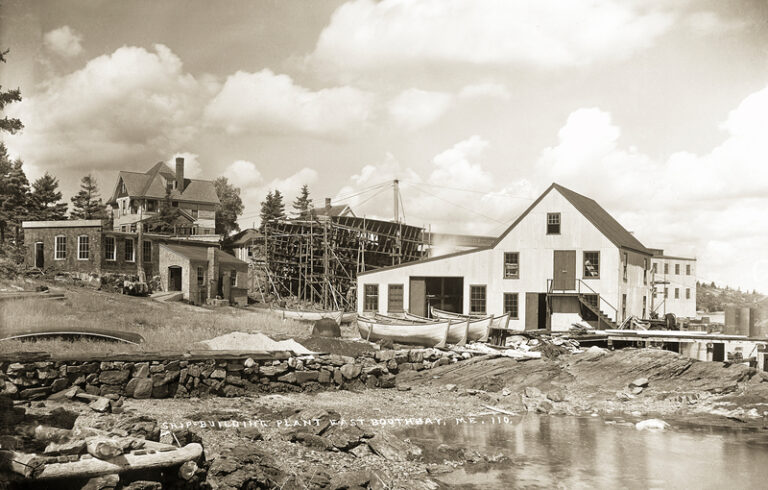
The person who made this photograph was one of those early summer visitors from Washington, young patent attorney Parker “Pack” Dodge. In 1902, Pack’s father bought a cottage from Tibbetts, which Pack and his brother eventually inherited. While photography was just a hobby for him, his photos offer a peek behind the curtain to a private place and magical time. Swimming, sailing, picnics, and the general scene were subjects for Pack’s camera over the years from 1905 to 1930. He also photographed the local surroundings like Brooklin’s working waterfront of fish and clam factories providing some of the best and only views of those traditional industries. He also captured a rare view of Tibbetts himself, the man who founded the colony.
Surprisingly, Pack’s collection of film negatives of various medium format sizes were uncovered in a shoebox in a house in Nebraska by his grandson, John Dodge. Dodge found them while cleaning out his parents’ home. He donated the collection to the Penobscot Marine Museum in Searsport in 2023. An exhibit, No Sleep ’Til Brooklin: Pack Dodge and the Haven Colony, 1900–1930, is on display at the Rockbound Chapel, 718 Reach Rd., Brooklin, Maine. The Dodge collection can be viewed through the museum’s online database.
Kevin Johnson is the photo archivist for the Penobscot Marine Museum in Searsport.