According to Bath Iron Works’ most recent economic impact report, just over 8% of the shipyard’s 6,772 employees lived in Bath in 2024. The company identified a 300% increase in housing costs over the previous decade, along with limited access to childcare, as major barriers to recruiting and retaining workers. That same year, Bath Iron Works announced it had received $34 million from the U.S. Navy to help address these challenges. While government investment in housing for Bath shipbuilders is not unprecedented, the proposed 84-unit development—intended primarily for entry-level professionals—marks a significant departure from earlier workforce housing initiatives.
Previous government investments in workforce housing occurred during wartime, when labor shortages threatened national defense production. Unlike many industrial communities, tenement-style housing was distinctly lacking from Bath’s built landscape. Instead, its blue-collar neighborhoods consisted largely of small, tidy, single-family homes. This modest housing stock could not absorb the workers needed to meet wartime production goals. Employee turnover was high as workers accepted jobs but left after failing to find suitable housing.
Because of these conditions, Bath became an ideal candidate for federal housing programs during both World Wars. Even so, new construction was initially viewed as a last resort. Federal policy first emphasized rent stabilization, maximizing occupancy of existing housing, and improving transportation to shipbuilding centers. During World War I, the “White Project” provided housing for 90 BIW families, while the “Brick Project” added 109 homes for workers building freighters and tankers at Texas Steamship Co.
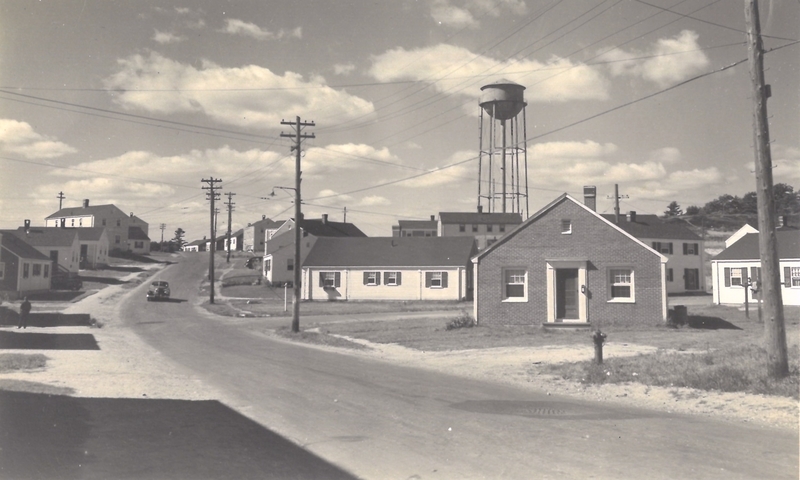
During World War II, the federal government funded Lambert Park and Hyde Park, which added 400 and 200 housing units, respectively. Tucked away in Bath’s north end, this 1943 image shows Lambert Park’s mix of housing units.
A second important distinction lies in the type of housing that was built. At a time when many working-class families were accustomed to crowded living conditions, none of these wartime units contained fewer than two bedrooms. The developments established new standards of living for working-class families by emphasizing detached, single-family homes, duplexes, and townhouses rather than tenements or boarding houses. This government-funded investment in the well-being and productivity of working families represented a notable shift in public policy and helped shape expectations for moderate-income housing in the decades that followed. This was especially radical during World War I, which predated New Deal social welfare policies.
By contrast, many recent housing developments across Maine—including the current BIW project—have favored studios and one-bedroom apartments. While these units help meet the needs of young professionals and couples entering the workforce, they do little to address the shortage of family-sized housing. Expanding the supply of larger rental units could not only better serve working families, but also strengthen long-term employee retention.
Kelly Page is curator of collections at Maine Maritime Museum. Explore resources and plan your visit at www.mainemaritimemuseum.org.