Teams of Maine fishermen spent the summer competing to collect the most notches from the tails of female, egg-bearing lobsters.
Called the Billion Egg Challenge, the contest was an industry-led effort to draw attention to v-notching, a long-established practice that helps conserve the species by making it easier to recognize egg-bearing lobsters that are illegal to keep and important to sustaining the population.
By mid-September, with just over a week left to go in the challenge, the team known as Southern Maine Future Catch (representing lobster zones E, F, and G) was leading the race with more than 27,800 notches collected.
Trailing them were the Downeast Tail Pinchers (zones A and B) with over 23,500 notches, and the Midcoast Notchmen (zones C and D) with over 20,800. The contest was due to end Sept. 25, which is National Lobster Day.
The light-hearted competition would earn the winning team bragging rights as well as a trophy. Followers were invited to donate or pledge their support to a particular team and, if that team won, earn the chance to win prizes including a year’s worth of lobster.
After v-notches are cut from the tails of lobsters, fishermen release them back into the water to ensure they produce more eggs in the future. The contest was organized by the Maine Lobster Community Alliance and Maine Lobstermen’s Association.
It was meant to celebrate the conservation practice and remind lobstermen why it’s important, according to MLA Executive Director Patrice McCarron.
The goal was for fishermen to collect a total of 100,000 notches, each one equating to 10,000 eggs that an average female lobster can carry during its life, for 1 billion total eggs. By Sept. 14, organizers calculated that more than 600,000 eggs had been protected through the new v-notches, meaning the teams would need a final surge to reach the goal by Sept. 25.
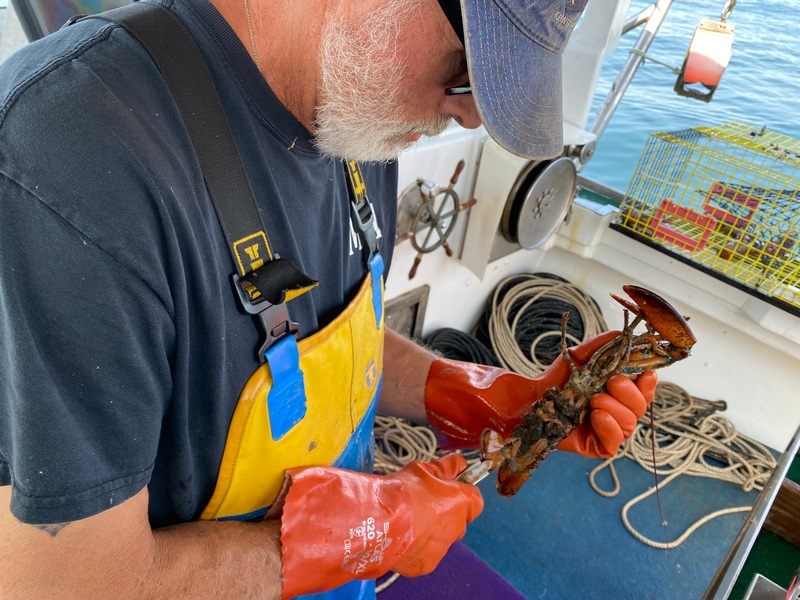
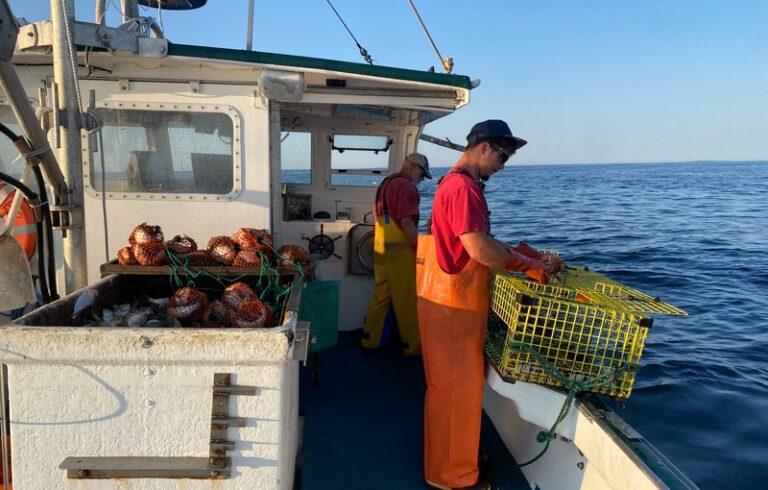
During a day of hauling in late July, longtime Spruce Head lobsterman Bob Baines and his sternman, Lucas Feener, collected about 5 first-time notches, along with a few re-notches of lobsters whose previous ones were disappearing. They collected the notches in a small glass jar provided by the organizers.
Baines is a board member of Island Institute, which publishes The Working Waterfront.
“That one I just re-notched, that’s a shedder,” Baines said after sending one back. “Odds are it’ll egg out.” He added, “That’s what we’re trying to encourage everyone to do.”
Even if lobstermen don’t reach the target of 1 billion eggs by Sept. 25, McCarron called the contest a “great success” and said they’d keep working towards it later in the season.
“We are creeping up on the goal and will be close when the competition wraps,” McCarron said. “It’s up to the run of lobsters—if they get a big run of eggers we may make it, but it takes time to come across those lobsters.”
Charles Eichacker is the editor of The Working Waterfront and Island Journal. He may be contacted at ceichacker@islandinstitute.org.