In September, the coastline off Brunswick and Harpswell transformed into a scene out of a horror film.
First, water around local mudflats turned unusually brown. State and local officials then warned of a spreading bloom of Karenia mikimotoi, a type of phytoplankton that had been spotted a month earlier in the waters off Massachusetts.
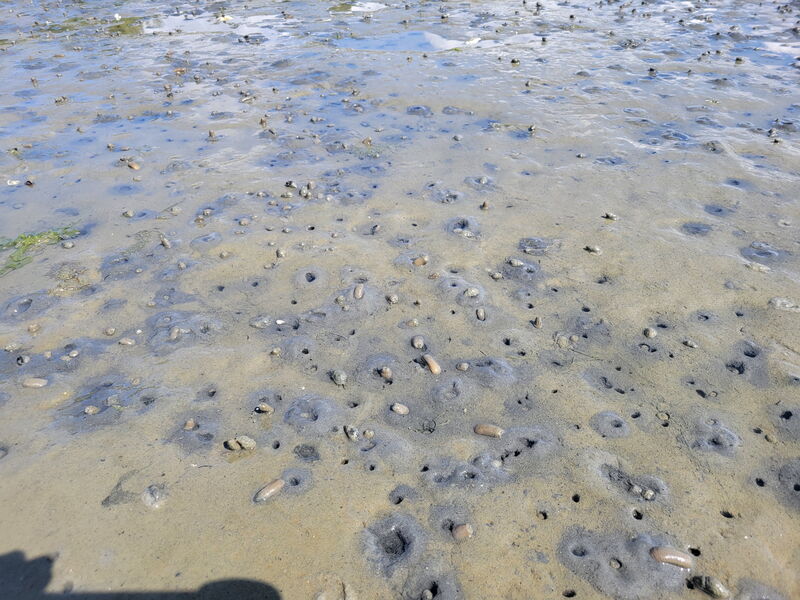
The bloom spread quickly and proved devastating. A Sept. 8 Facebook reel shared by the Harpswell fisheries and marine resources committees showed a mudflat littered with dead worms and clams. Local officials closed the flats to protect the juvenile shellfish that survived.
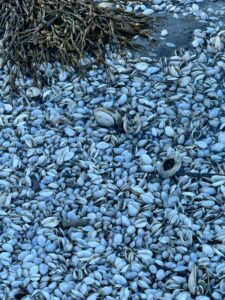
“It was hard to watch,” said Anne Langston Noll, executive director at the Maine Aquaculture Innovation Center in Walpole. “They saw the clams crawling out of the mud to try and escape the bloom, and because they couldn’t, it became like a cascade. You’ve got things dying, and then you get the dissolved oxygen plummeting.”
It is important to note that shellfish exposed to K. mikimotoi are not toxic for human consumption. Nevertheless, the algae can cause high rates of mortality in shellfish, worms, and even sea urchins. The bloom’s expansion to Brunswick was particularly brutal because the area flats had recently been reseeded, said Dan Devereaux, the town’s coastal resource manager.
“This algal bloom [causes] the worst mortality, immediate mortality, in shellfish that I’ve ever witnessed,” Devereaux said. “And I’ve been working here in this area for 30-plus years.”
The bloom, which has since dissipated off Brunswick, has also spread to the waters off Port Clyde. As of mid-October, it appeared to be dissipating in most areas of coastal Maine, according to state officials.
Some Maine aquaculture producers are reporting high mortality rates with their shellfish stock, but it can be difficult to attribute each death to the algae, which was last seen in Maine waters in 2017, said Noll. It will be difficult to know the full impact of the bloom for some time, said Sebastian Belle, the Maine Aquaculture Association’s executive director.
“The real question for us is what will happen in the spring, and will we see elevated mortality levels in the spring,” Belle said.
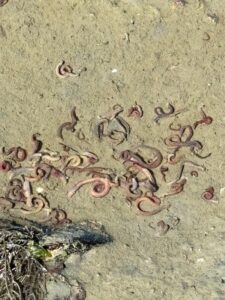
One reason for this is because shellfish often react to algal blooms by closing up and ceasing to feed. Late summer and early fall are a prime feeding time as they try to stock up for winter.
The bloom likely will hurt the state’s estimated $208 million aquaculture industry as well as those who commercially harvest wild shellfish. This could have large-scale economic ripple effects, as many Mainers rely on shellfish harvesting for a second income to help pay for necessities like heating oil and school clothes, Noll said.
“It’s easy to think about the dollar amount of lost seafood, but it’s also about the rolling impacts to human beings in our working waterfronts,” she said.
While K. mikimotoi is common in other regions of the world, researchers are still trying to learn how it impacts sea life in New England waters. Because of this, regional shellfish experts have little specific advice for aquaculture producers for how to handle the bloom. Instead, they suggest reducing the handling of shellfish that are already stressed by the bloom.
“Basically, the best thing to do is to just not touch the animals at all and leave them to kind of hunker down,” Belle said. “With shellfish as with human beings, stress can be cumulative.”
While it can be hard to spot a silver lining to this crisis, those interviewed for this story said the collaborative nature of regional shellfish stakeholders has been an asset. They also believe that this collaboration will only deepen because of this experience. During the bloom, the Maine Department of Marine Resources, University of Maine Darling Marine Center, Maine Sea Grant, Maine Aquaculture Association, Bigelow Laboratory for Ocean Sciences, and industry stakeholders have been rapidly sharing information to coordinate a response.
“You combine all those observations and that expertise, that doesn’t just occur everywhere, and that adds up to a pretty good team to try to understand this,” said Dana Morse, an extension agent with UMaine Cooperative Extension.
In addition, new technology is becoming available to help monitor for future algal blooms. Since 2019, Bigelow Laboratory in East Boothbay Harbor has been collaborating with Maine DMR to develop new ways to detect ocean pathogens or organisms that can impact sea life off the state’s coast. The monitoring program was successful in detecting the bloom’s spread, said Nick Record, director of the Tandy Center for Ocean Forecasting at Bigelow.
Record said such collaboration and detection capabilities will be needed in a rapidly changing seascape, where climate change and international mobility is causing organisms like the algae to show up in novel places.
“I think when it comes to all kinds of aspects of the ocean, we should be preparing for more surprises,” Record said.