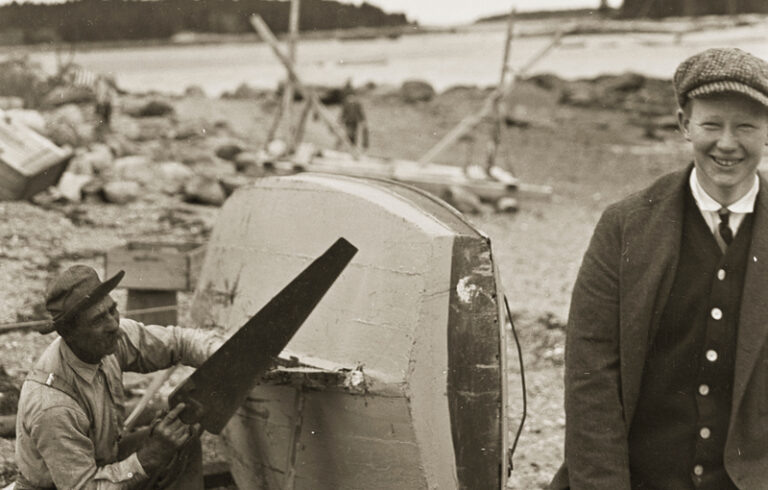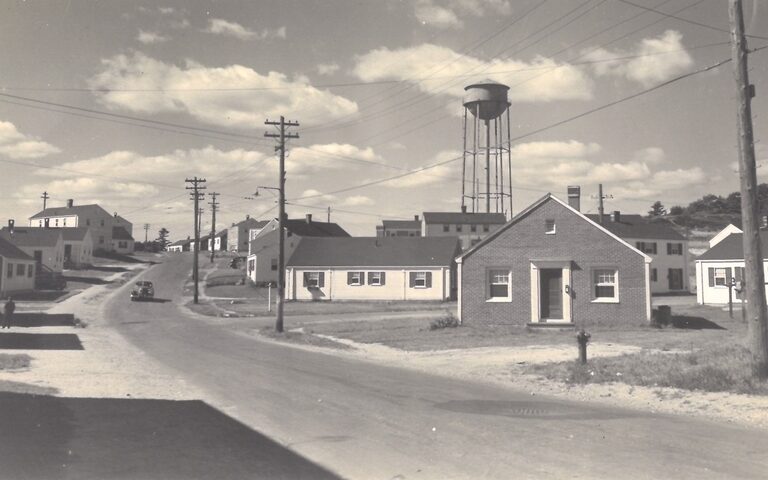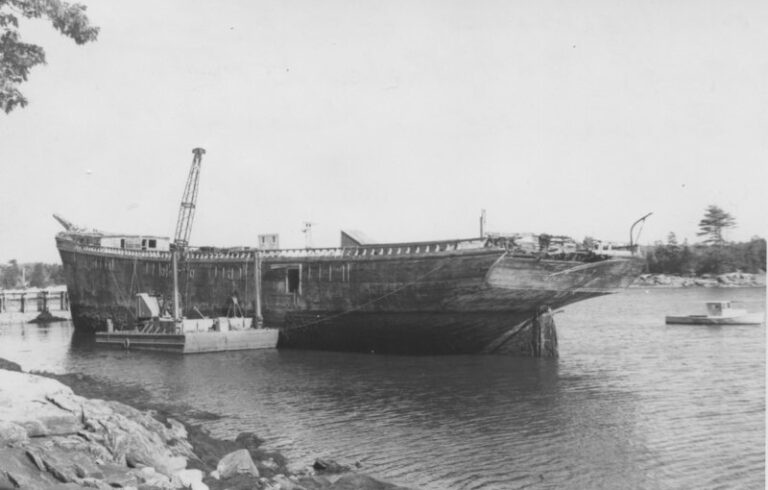
Early in my position as photo archivist at PMM, I was asked to do a project with a group of students at Searsport High School. I decided to do a re-photographing exercise using photos from the Eastern Illustrating & Publishing Co. Collection. The students and their instructor, Leslie Gregory, were as enthusiastic about the exercise as I was! It was a fun challenge to find the exact vantage point where a photographer stood and retake the photo. It’s always an intriguing revelation to see how much—or how little—a scene has changed between “then” and “now” (we gain similar insights from town elders at illustrated talks where the Eastern photos are shown). I did further re-photographing projects with that class for the next several years, and I also did it on my own wherever I travelled around New England.
When George McEvoy asked me to put together a book of historic photos of the Boothbay region, I knew just how I wanted to approach it. Eastern’s photographers covered every nook and cranny of that peninsula at a time when it was still a cluster of distinct working communities, before the rise of heavy tourism. The past three years included numerous trips to Boothbay. The variables of season, time of day, and tides—along with change due to fires, development, and time—combined to make the simple concept of retaking a photo a bit difficult at times. I had plenty of help from locals to get it right. I even had to cheat a bit by enlisting a drone photographer, Joe Potter, to secure a couple of “bird’s eye” views which would otherwise have been impossible due to tree regrowth.
The biggest reward from the project was hearing the stories told by elderly locals who’d witnessed the slow metamorphosis of their communities. Driving around Southport with 97-year-old Evelin Sherman to find these locations was magical. It was fascinating to hear Barbara Rumsey talk about how Boothbay Harbor had changed over many decades but had never lost its sense of place. Spending so much time with George during what would be the last years of his life was worth all the effort.
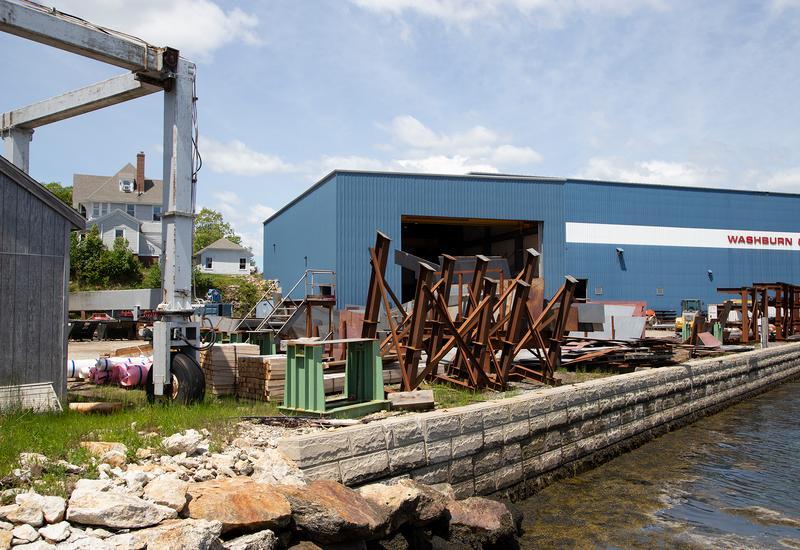
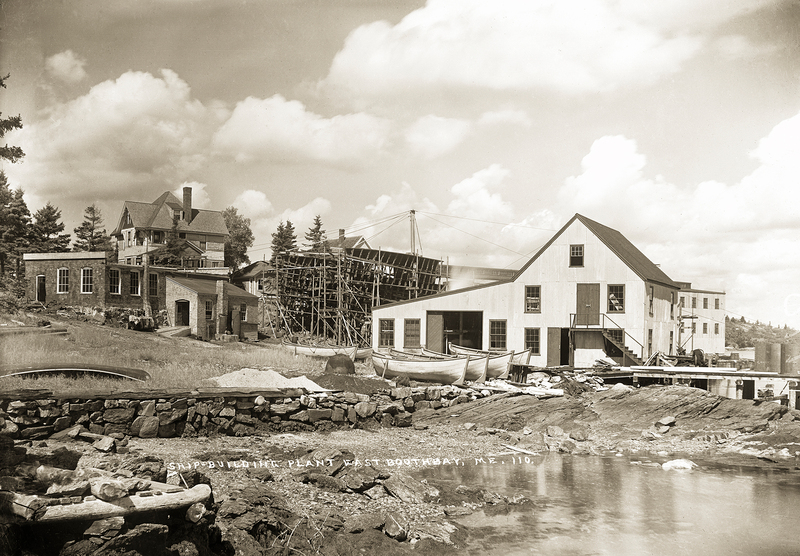
Jean-Baptiste Alphonse Karr coined the phrase, “The more things change, the more they stay the same.” This rings true in this East Boothbay waterfront scene. The “then” view shows the Rice Brothers shipyard at the bottom of School Street shortly after a disastrous fire in 1917. The new buildings, together with the remains of burned ones, show a transformation actively happening. The show must go on! The “now” view looks much different, yet it also depicts an active shipyard; even the names have changed. If one looks closely, the modern scene shows one remaining building from over a century ago, the original home of Frank Rice, now the offices of Washburn & Doughty.
Kevin Johnson is the photo archivist for the Penobscot Marine Museum. This piece is inspired by a new collection he has just published, Boothbay Now and Then: New and Historic Images of the Boothbay Peninsula.
What TO Read Next...