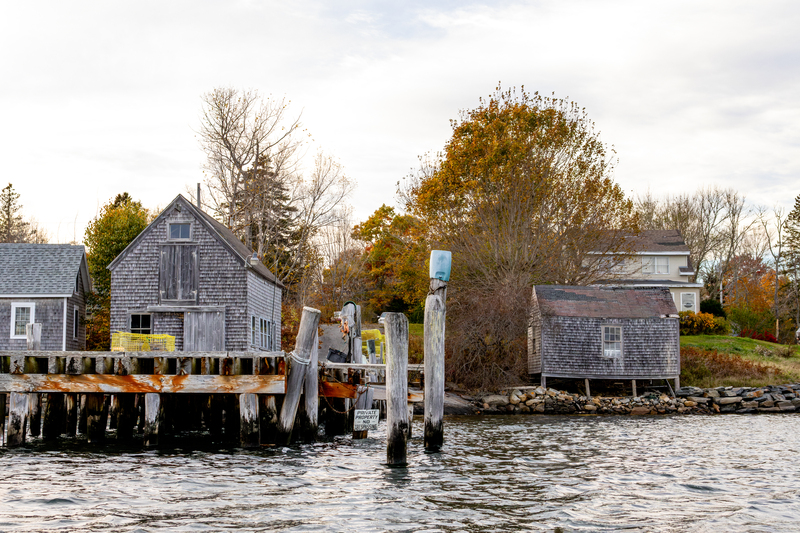
Cushing is on track to buy one and a half acres along Pleasant Point Gut where local officials eventually hope to build a public boat ramp.
Residents approved the purchase in March by a 211-81 vote, providing a strong mandate to continue with the project. If successful, it would create the first public access for boats to reach deep water in the fishing town along the St. George River.
“I think the town is very happy it’s going forward,” said Harbormaster Austin Donaghy, who has helped lead the project. “The vote gave us a very clear view of what the townspeople would like.”
Officials aim to close on the purchase on June 30. The owners have agreed to sell the land at 16 Barnacle Lane, which now includes an old pier, a home, and some sheds, for roughly $730,000. The town plans to cover half of that cost and get much of the rest from the Land for Maine’s Future program. The board of the state program initially approved the funding in September and was due to consider final approval on May 27.
By late April, the town had completed many of the requirements to secure the funding, including getting voter approval and surveying and appraising the property. It was also working to complete an environmental assessment and ensure it had clear title for the land.
Town officials had originally hoped the Land for Maine’s Future program would cover half of the purchase price, or $365,000. But Donaghy now expects the final amount to be lower—around $290,000—because of the findings of a property appraisal.
Cushing has been working for 20 years towards the purchase of land for public water access. Voters have annually agreed to contribute money from boat excise fees into a public water access fund that will provide most of the $365,000 the town expects to spend on the purchase. It would also use $31,000 in new appropriations and $26,000 from undesignated funds.
The town is seeking grant money to cover the gap in state funding and has a bridge loan from Maine Coast Heritage Trust to help close on the purchase, according to Donaghy.
If the purchase goes through, the town next wants to clear the site and develop it for parking and a slab-based boat ramp, with planning assistance from the Maine Department of Inland Fisheries and Wildlife. While overnight parking would not be allowed, Donaghy said the town is also looking into developing a nearby lot into parking for people traveling overnight to one of the nearby unbridged islands, primarily Gay Island.
The project hasn’t been universally popular in Cushing. It received pushback before and during a public hearing in January. Critics also aired their concerns in a letter to the town that was co-signed by more than 50 households, many from the area near the proposed boat ramp.
In the January letter, they acknowledged the importance of the town securing public water access, but argued that opening the area around Pleasant Point harbor to public access could degrade the environment and bring unsafe levels of vehicle traffic. They called for the town to set rules for the property—including limiting its use to local residents and workers—and devote more resources to enforcing them. They unsuccessfully requested a 180-day moratorium on considering the purchase.
“This open-ended vision for such a small site would entail dramatic changes to the current limited use of Pleasant Point harbor by approximately two dozen commercial fishing boats and some local residents,” they argued.
During the public hearing, other residents came to the project’s defense. One man said he lives on a landlocked property along Pleasant Point Road and would appreciate having a public place to put his kayak into the water. Others argued it would make it easier to reach Gay Island, where a few residents live and where a house fire occurred in recent years. Fishermen have also supported the proposal, given that it would help them access their vessels or service them in emergencies.
According to Donaghy, if the town does obtain the land, the local harbor committee would then develop rules for its use and seek more public feedback. He noted that officials could also review the speed limit in that area.
To help pay for future work on the site, the town would try to replenish its public water access fund.