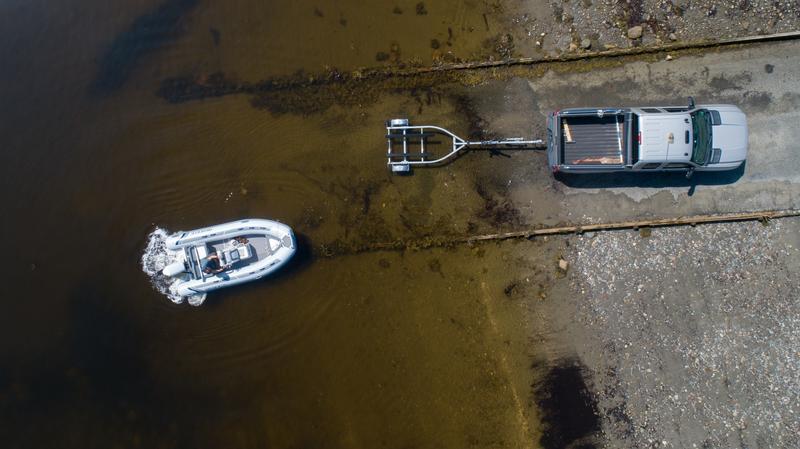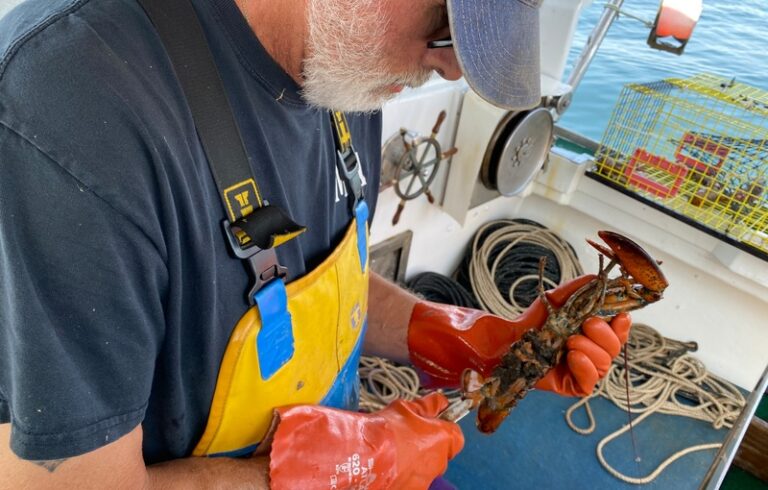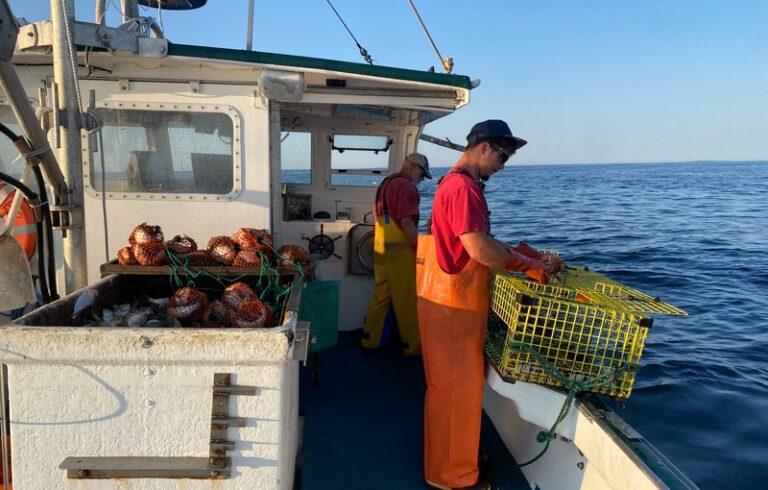
Maine’s coast is beautiful, with mountains to mudflats, pine trees to pebbles. It is more than a scenic backdrop; it is an economic hub for the marine economy. The working waterfronts of Maine are home to one of the most productive lobster fisheries in the world, a growing aquaculture industry, and thousands of recreational boaters who support our local economies. Now, for the first time, there’s a comprehensive data-driven blueprint for how this maritime economy can lead the state’s clean energy transition via expanded shoreside infrastructure and the electric vessels on water.
Island Institute is releasing a first-of-its-kind statewide report on shoreside electric vessel charging, Electrifying Maine’s Working Waterfront: A Study of Shoreside Charging Infrastructure. The report was prepared by Homarus Strategies, LLC with support from Haley Ward, Inc. It analyzed shoreside charging potential across all 1,605 of Maine’s working waterfront areas.
What the Report Found
Using a geospatial evaluation framework with multiple criteria, researchers scored every working waterfront site across four dimensions: proximity to the power grid, existing demand from boat owners, market potential for growth, and overall site viability. The result is a detailed, county-by-county picture of where shoreside charging infrastructure can realistically be built and for which types of vessels. The analysis also includes an interactive online geographic information system (GIS) tool that can be used by municipalities, utilities, and other decision makers to advance grid readiness and shoreside infrastructure.
The headline numbers are encouraging—373 waterfront sites were scored as highly suitable for shoreside charging across one or more vessel-use cases, including commercial fishing dayboats, aquaculture skiffs, small recreational outboards, and larger yachts. Of those, 140 sites can support multiple vessel types, offering flexible, multi-use charging solutions.
Regional patterns emerged clearly from the data. Southern Maine, from Kittery through Casco Bay, is best positioned for recreational vessel charging. The Midcoast, spanning the Sheepscot to Penobscot rivers, offers the strongest opportunities for aquaculture electrification. High-value commercial harbors like Stonington, Bass Harbor, and Jonesport/Beals are the most viable candidates for commercial fishing hybridization, or even electrification—a critical finding given that Maine’s lobster fishery accounts for roughly 75% of annual marine landings by value.
Additionally, the team conducted 35 stakeholder interviews and four community round tables in Ellsworth, Machias, Portland, and Rockland. The underlying message received from fishermen, harbormasters, marina operators, and municipal planners was that reliable infrastructure is the prerequisite for adoption. Without it, even willing early adopters won’t make the leap.
Why This Matters for Policy
The report arrives at an important moment. Maine Won’t Wait, the state’s recently updated climate action plan, explicitly calls for supporting commercial marine and small harbor craft to adopt electrified propulsion. As more folks on the water see the benefit in cost savings for fuel and maintenance costs, and experience the other social benefits of electric vessels (they are virtually silent, produce zero local emissions, and can be VERY fun to maneuver), the need for reliable and readily available shoreside infrastructure is critical, and this report provides the evidence base to act on advancing this transition.
However, there are real infrastructure hurdles. Only a quarter of Maine’s working waterfront facilities currently have access to three-phase power—which is needed for Level 3 fast charging—within 250 feet of the water. Grid capacity constraints, especially in the more rural areas along the coast, pose an immediate barrier. Additionally, many commercial harbors rely on moorings rather than docks, complicating the ability to make shoreside connections.
Now, there may be use cases that do not require the intensity of three-phase power and may support lower-cost solutions utilizing Level 1 (conventional household outlets) or Level 2 (think electric dryer or oven outlets) to power charging infrastructure for aquaculture needs, municipal harbors, and recreational marinas. The report outlines three parallel strategies for policymakers: widespread low-power demonstration projects, targeted high-power investments in key commercial harbors, and early-adopter incentive programs to build market confidence.
Maine’s marine economy has weathered storms for generations—but climate change and rising fuel costs demand new strategies. Explore the report and mapping tool at islandinstitute.org and join us in turning this data into dockside action. Contact Island Institute to discuss how your harbor can be part of Maine’s clean energy transition.
Erin Quetell is public policy director for Island Institute, publisher of The Working Waterfront. She works with communities and partner organizations and leads government relations work and public policy campaigns to advance the resilience of Maine’s island and coastal communities. She may be contacted at equetell@islandinstitute.org.