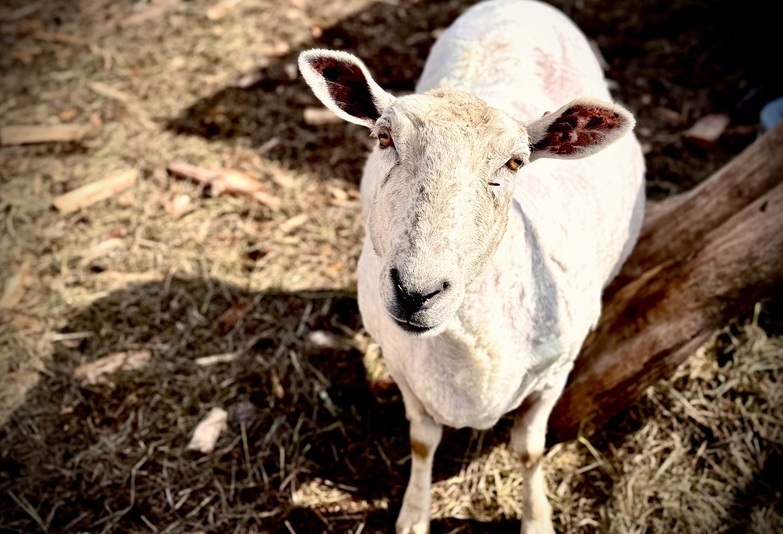
For North Haven farmer Becky Bartovics, the secret to blue ribbon-winning fleece is multifaceted.
Some of the magic might come from the salt air and cooler summers. The sheep’s Coopworth genetics, a particularly auspicious Leicester/Romney cross, certainly play a role. But the real star player is the shearing day itself, which brings together friends, family, and an expert shearer to create the best possible experience for the sheep—and their wool.
“That’s been in my life since 1977, so it’s a longstanding thing for me,” Bartovics said. “It kind of harkens back to the old days in Scotland and England.”
Bartovics has owned Cider Hill Farm since 2005. She grew up on a farm in Delaware and later in Lincoln, Massachusetts, where she was introduced to sheep-rearing by a neighbor. Cider Hill Farm, which enjoys a striking view of the Camden Hills from the island’s north shore, produces vegetables, pork, and lamb, in addition to the prized fleeces. The weekly farmstand is also often stocked with fermented and pickled vegetables, sourdough loaves, and bouquets.
Cider Hill Farm’s fruit trees are an attraction of their own, with a genetically unique specimen of apple gracing the front yard. In September, when the farm lives up to its name with regular community cider pressings, its branches are laden with pale green, quince-shaped fruit named Cora’s Grand Greening after a former resident of the farm, a midwife.
The annual sheep-shearing at Cider Hill Farm is as much a community event as the cider pressings. “I think the way she does it is, like, really special, it makes it really nice for everyone, she has a way of bringing people together,” said Emily Garnett, the professional sheep shearer Bartovics has worked with since 2006.
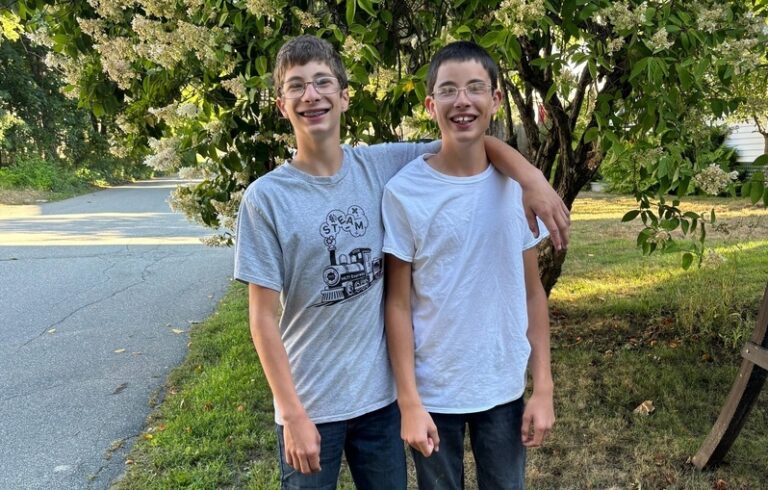
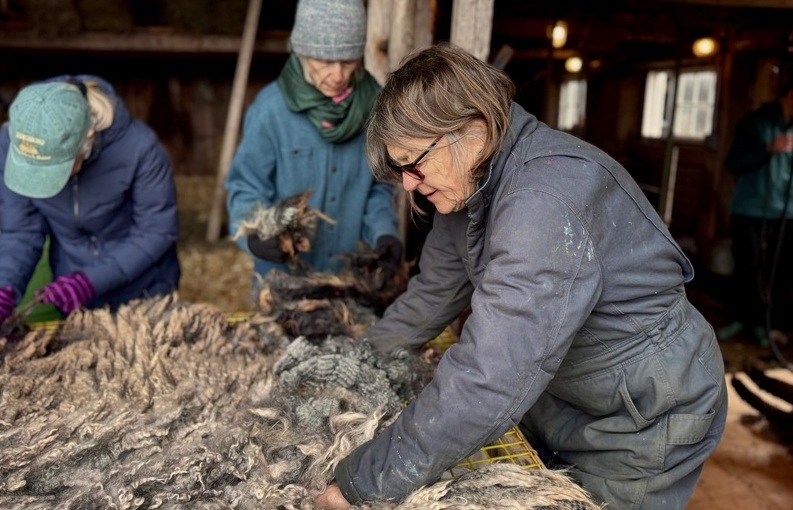
Shearing sheep is an all-hands-on-deck event. “It takes more than just one person shearing sheep; you need a whole bunch,” Bartovics said. “You muster the sheep, put coats on the sheep to keep them clean, we take manure tags off around the outside and anything that’s full of hay, then roll up the fleeces,” she said. All told, 20 friends and family members came through the farm to help on the March 21 shearing day, from Bartovics’ 6-year-old granddaughter, who kept the sheep happy with alfalfa kibbles, to her cousin Lisa, who worked one end of the skirting table, cleaning the fleece after it was shorn.
To keep the humans happy, Bartovics provided a hearty lunch. This year, the menu included curried squash soup, made with Cider Hill Farm produce, bread, salad, a huge frittata, and dilly beans brought by a friend.
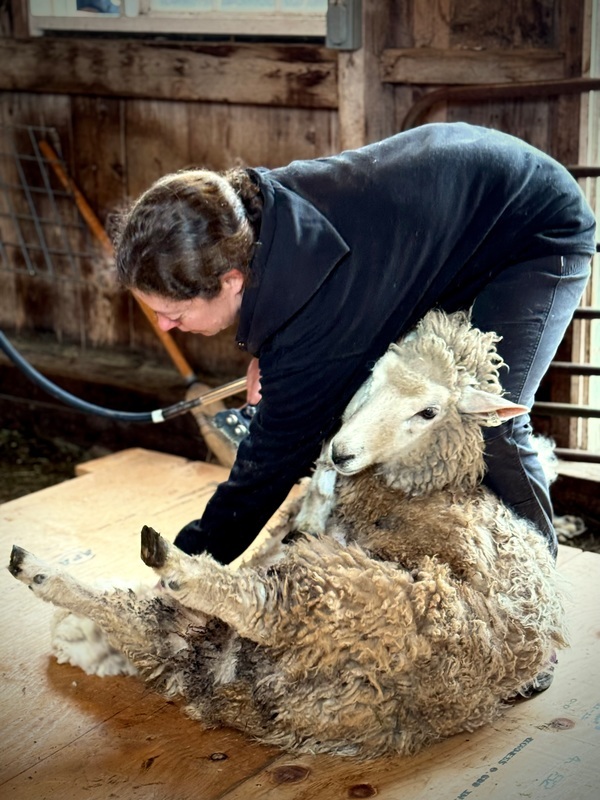
To keep the sheep happy, Garnett works with their nature to make the shearing as low-stress as possible.
“We made it so it was kind of easy to get a hold of one and then calmly move it to the shearing platform, and then I hold them so that their legs aren’t touching the ground or the wall. They feel like they can’t push off on anything and get away,” Garnett said. “They are afraid, so just by handling them calmly and gently and trying to quickly get through it, we can help them have a better experience.”
The final ingredient needed for award-winning fleece is in the care taken to keep it clean and the shearing technique Garnett employs. Bartovics’ sheep wear coats, she said, in an effort to keep as much straw, dirt, and manure out of them as possible while they graze. They also spend their pre-shearing night indoors to ensure the wool is dry when it’s time to shear.
“Emily does a really good job not doing second cuts,” Bartovics said. A “second cut” occurs when the shearer doesn’t cut the full length of the fiber on the first pass and has to go back for a second trim: “You notch and end up with these little pieces of wool. I’ve always noticed how few second cuts are in my fleece.”
“All shearers, or most of us, shear sheep in the same pattern,” said Garnett. “Part of why we shear in that pattern is because you have to hold onto the sheep with your legs and body while your hand is doing the shearing, and so this pattern was developed as the most efficient way to get all around the sheep’s body and get all the wool off. With every sheep that I shear, I am doing my best to stay right on the skin so I’m getting the full length of the fiber with every cut.”
Bartovics’ and Garnett’s winning combination of community and care is unique in a field that sometimes values speed over compassion: where Garnett shears four or five sheep in an hour, some shearers can race through 150, but, as Bartovics said, the sheep “looked like hamburger after.” The pastoral setting, delicious lunch, and opportunities for young and old to get involved keep the sheep happy, the helpers returning, and the fleeces earning that coveted blue ribbon year after year.
Courtney Naliboff teaches, writes, and plays music on North Haven. She may be reached at courtney.naliboff@gmail.com.