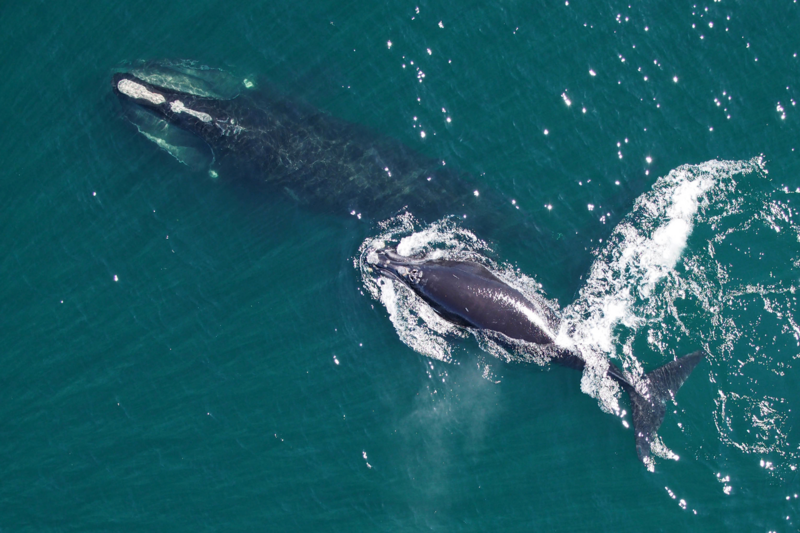
Maine lobstermen welcomed the news that federal regulators have preliminarily updated their estimates of North Atlantic right whale deaths and injuries from fixed gear fisheries and found them to be lower than they were four years ago.
Based on those findings, regulators could decide to loosen long-anticipated new lobster fishing rules aimed at preventing deadly entanglements with endangered whales, but which fishermen have argued would be too restrictive and hobble the industry.
Those rules were already delayed by Congress until 2028 and could have faced additional delays under a new bill passed by the House of Representatives earlier this year.
NOAA Fisheries announced it new initial findings on Nov. 5. The agency listed several updates that have contributed to its position, including:
- A new scientific method for apportioning whale entanglements by country based on the latest gear identification data indicates the U.S. proportion is around 25%, less than previously estimated. These preliminary results are currently in peer review and subject to change.
- The Population Viability Analysis model can be used to inform recovery factors, as measured by the “potential biological removal level,” or PBR, of the right whales under the Marine Mammal Protection Act. Given that this is one of the most well-studied whales in the country, with advanced modeling tools and high-quality data, there is reduced uncertainty in the current and future status of the species and as a result an adjustment to the recovery factor may be justified.
- The 2025 population estimate and 2024-2025 estimated mortality, which will be released in mid-November at the North Atlantic Right Whale Consortium.
PBR is the scientific estimate used in marine mammal stock assessments to determine the maximum number of human-caused deaths or serious injuries a marine mammal population can sustain annually and still reach its optimum population.
“Based on a preliminary review of this latest information, NOAA Fisheries expects the estimated mortality and serious injury incidental to U.S. commercial fixed gear fisheries to be substantially lower than estimated in 2022, bringing estimates within the range of PBR,” the agency said.
Maine fishing regulators and industry representatives welcomed those findings.
“This announcement is positive news for Maine’s fixed gear fisheries, including lobster, and represents the commitment by [the National Marine Fisheries Service] to a scientifically sound approach to assess risk posed by fixed gear fisheries that does not rely on ‘worst case’ scenarios,” said Carl Wilson, commissioner of the Maine Department of Marine Resources, in a statement.
The Maine Lobstermen’s Association, which has fought the new rules in court, also welcomed the shift, calling it “a dramatic change from the government’s previous assessments that misapplied the science and the law, threatened the future of Maine’s lobster industry, and were ultimately ruled unlawful.”
The group added, “For more than 25 years, Maine lobstermen have made significant and costly changes to their fishing practices to protect right whales. Those efforts reflect the industry’s longstanding commitment to conservation.”
The group plans to closely follow the next steps with the regulations.