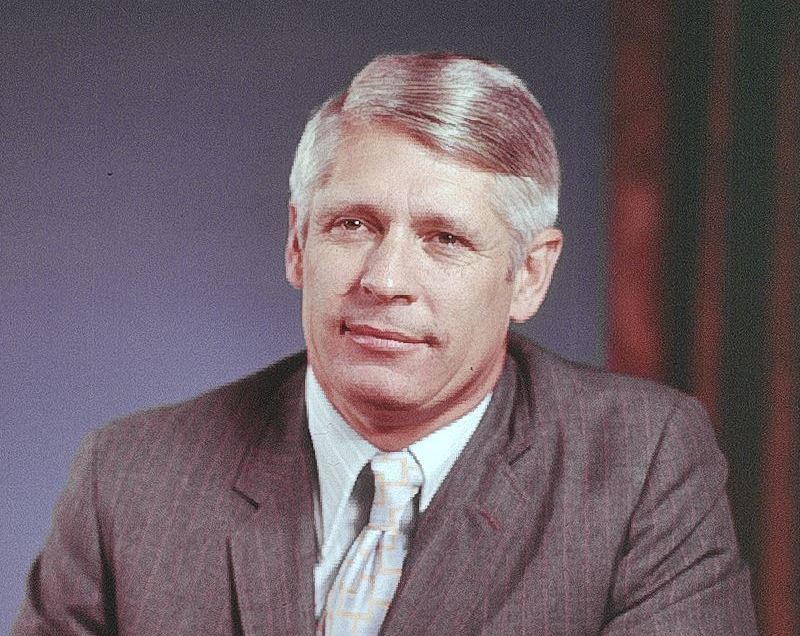
Sixty years ago, Mainers elected a new governor who went on to transform state government, and in many ways give it the shape it still retains today.
Ken Curtis was just 35 when he defeated incumbent John Reed in 1966, the last time a Maine governor lost a reelection bid. A liberal Democrat, Curtis nonetheless worked successfully with Republican legislatures throughout eight years in office to enact a state income tax, create the state university system, reform K-12 education, and create literally dozens of new programs, capped off by reorganizing government into 16 cabinet departments.
It’s in his approach to economic development and land conservation, however, that he differs most dramatically from his predecessors and successors. Today, no Democratic officeholder would suggest that a major oil refinery be sited on the coast of Maine. And no Republican could imagine creating a major new wilderness area. Yet Curtis did both.
A bond issue to create what became the Allagash Wilderness Waterway passed in 1966, and Curtis went to work to ensure it would receive what he called “maximum wilderness protection.” At the time, virtually all of the north Maine woods was privately owned except for nearby Baxter State Park. After Sen. Ed Muskie was able to enact the National Wild and Scenic Rivers Act in Congress, Curtis arranged for the Allagash to receive both federal and state protection, the only river to have such joint management.
Crucially, Curtis believed that protecting key landscapes of forests, lakes, and streams would yield the greatest economic benefits, even as he oversaw a boom in paper mill and sawmill construction that were encouraged by his Department of Economic Development. He coined the slogan, “Conservation through Development,” and was determined to achieve both. In the 1990s, when the group Restore: The North Woods proposed a 3.2-million-acre national park in terrain surrounding Baxter and the Allagash, Curtis was one of the few major political figures to endorse it.
Along the upper Washington County coast, Curtis advocated a different approach. After growing up on a failing 5th-generation farm in Leeds, the new governor believed state government must become an active partner in industrial development to relieve economic distress and create prosperity in neglected regions.
At the time, Mainers heated their homes almost entirely with fuel oil and were paying the highest prices in the country matched with the lowest incomes in New England. The cause was the Mandatory Oil Import Program enacted by the Eisenhower administration to limit Middle Eastern imports, allegedly on grounds of national security. The result was that domestically produced oil cost twice as much, with Maine consumers paying far higher prices because of the import controls.
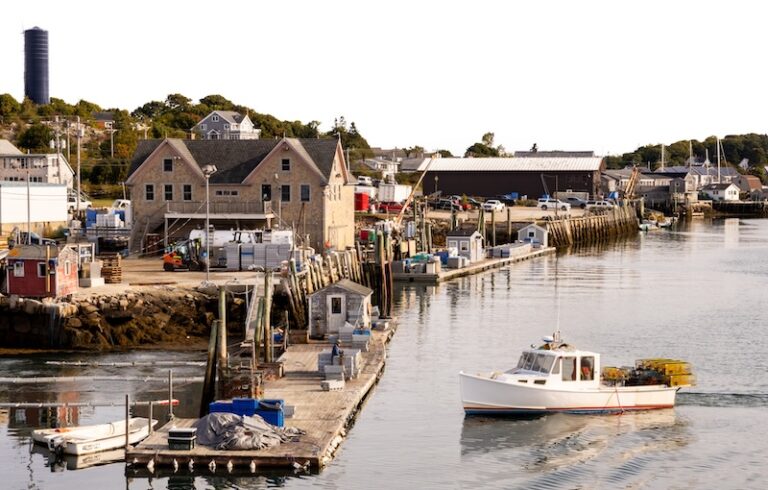
There were no oil refineries in New England, and still aren’t—the only U.S. coastal region without any. The best way to bring prices down and provide benefits throughout the region, Curtis believed, would be to build one. The governor assembled a talented team of aides who fixed on Machiasport and Machias Bay as the best site for a terminal and 300,000-gallon-per-day refinery operation.
Thus began a multi-year battle over the Machiasport site and others along the Maine coast, including Eastport, Sears Island, and Portland Harbor, to locate a refinery, which in turn spawned numerous other energy and manufacturing schemes. To date, none has been built.
While Curtis’s advocacy for a refinery may seem shocking today, global warming was not yet a concern, and alternative fuels, such as coal, were dirtier or more expensive. Nor was Curtis blind to the need for strict environmental controls, which he said must precede any actual construction.
Lawmakers duly passed the Oil Handling Act to combat spills. It has efficiently protected Portland Harbor ever since, and served as a model for Sen. George Mitchell’s federal legislation passed after the Exxon Valdez disaster in Alaska’s Prince William Sound in 1989. Companion legislation, the Site of Location Act, created the first statewide zoning for industrial and commercial development. Ironically, Maine ended up with some of the nation’s strictest environmental laws but not, with rare exceptions, the economic development they were intended to regulate.
In the decades since, Maine has forged ahead on many Curtis administration priorities. Curtis doubled the number of state parks, and acquired 650,000 acres of public reserved land, the result of negotiations with major landowners after courts upheld the state’s ownership of the unorganized territory’s “public lots.” Funding from the federal government, the Land for Maine’s Future program, and contributions from dozens of private land trusts has protected millions of forested acres from development while vastly expanding public access to the coast and interior.
The “development” part of “conservation through development” has fared less well. The animus that understandably developed toward petroleum refineries, nuclear power plants, and LNG terminals has extended to far less threatening uses such as fish farming and wind turbine fabrication. Not coincidentally, Maine’s rural areas and especially its magnificent Bold Coast have continued to struggle economically, with tourism and seasonal homes the only significant growth sector. Jobs remain scarce, and out-migration continues.
Ken Curtis believed that Maine could balance the challenges of preservation and development, that conservation and even wilderness was fully compatible with sustainable growth. Environmental protection and conservation joined economic development as the focus of cabinet-level departments on his watch, as he tolerated and even encouraged lively public debate among his commissioners.
The activist stance he embodied, including trade missions abroad, agreements with Canadian provinces, and emphatic support for cooperation with fellow New England states, has rarely been equaled or even approached by his successors. These far-reaching initiatives, along with steadfast support for the Wabanaki nations, labor unions, women, the elderly, and racial and ethnic minorities, led to the widespread belief by the end of his administration that Curtis had indeed become governor of all the people of Maine.
As we ponder our choices this November, these are accomplishments and aspirations worth remembering, and renewing.
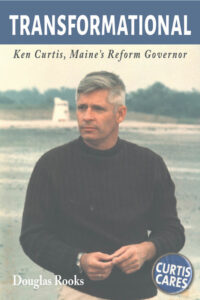
Douglas Rooks, a lifelong journalist, has served as editorial editor of the Kennebec Journal and editor and publisher of Maine Times, and is a weekly columnist for the Maine Trust for Local News. He has written five books, the most recent Transformational: Ken Curtis, Maine’s Reform Governor.