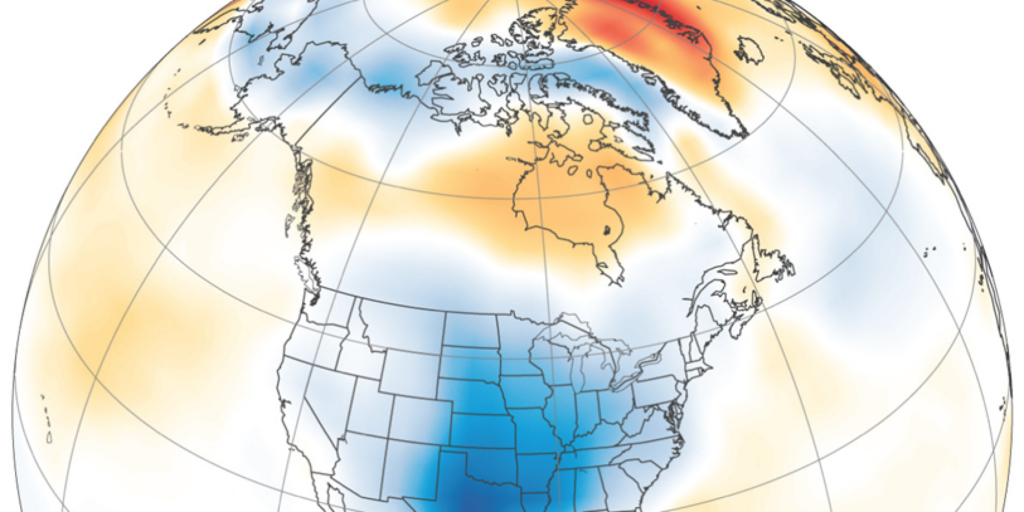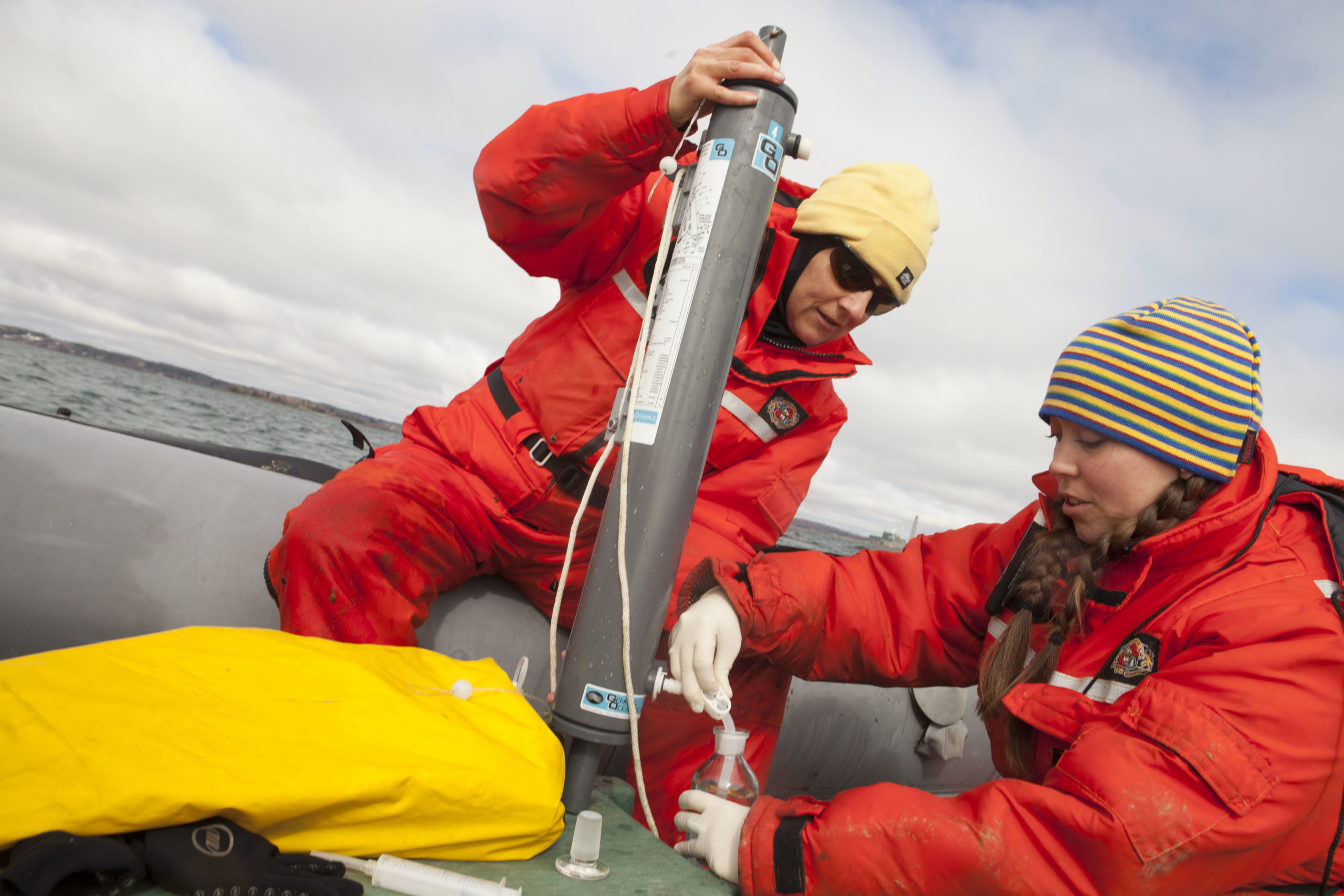
In the face of shifting federal policy priorities and funding, Maine is finding that federal agencies have become less reliable partners in the effort to track the effects of climate change on the state. These shifts impact our state in multiple ways, with the disruption of funding for grants, research, and related programs often the most obvious example.
That’s the takeaway from a revealing new white paper titled “Maine Climate Science Assets at Risk,” co-authored by Nicole Spaulding and Ivan Fernandez, both of the University of Maine, and Island Institute’s Senior Ocean Scientist Susie Arnold.
Here are three other impacts that the authors document:
The first is “administrative realignment and expertise attrition,” or the shift of an agency’s mission away from climate priorities. This includes reducing research stations, regional offices, and modeling hubs, as well as weakening scientific advisory boards and politicizing staff scientists. As this disruption prompts scientists to leave federal service or not enter it in the first place, fewer scientists remain in the agencies to partner with. For states, that means a loss of institutional knowledge, a decrease in expert support, and weaker technical capacity.
The second impact is “archival transition,” which means that federal data sources and archives become less stable. Longterm datasets that are critical to understanding change over time may be disrupted. It is hard to go back and fix these holes after they emerge, diminishing the future value of the dataset. Existing data may be broken up or made harder to find, index, or access. It may be re-indexed in response to linguistic shifts, sometimes making it impossible to locate. The cumulative result is that states are left with more limited data and weaker evidence to rely on for decision-making.
The third impact is “cooperation and international isolation”: As the U.S. withdraws from major climate science frameworks, international monitoring efforts weaken, as do the ties U.S. scientists need to navigate the peer review process. Additionally, expectations of open access are rolled back and more research moves behind paywalls, depriving states of access to shared global science and consensus baselines.
With these impacts in mind, the big question is: if we are concerned that federal agencies are becoming less reliable partners in achieving our climate goals, what can we do about it?
The number of assets, their national scope, and the costs of establishing a new monitoring program—think setting up a satellite network—mean that Maine won’t be able to address shifts or gaps across all of these assets.
Still, the state has opportunities to make meaningful investments. The Maine Mesonet weather monitoring system is one example, deploying a network of 26 stations to fill gaps in missing or deprioritized federal crop management data. Data processing is conducted in partnership with a university in New York that does similar work, and the data is shared directly via the Maine Climate Office website.
Public-private partnerships, such as the one supporting the American Lobster Settlement Index, are another example of how industry, researchers, and the state support the collection of baseline population data that informs our collective understanding of the fishery’s health.
The new white paper outlines a pathway for Maine to pursue strategic climate autonomy, in which the state builds institutional stability and empirical autonomy, achieves archival independence and information resilience, and maintains appropriate diagnostic oversight while smartly leveraging resources.
The paper’s concluding comment sums up the opportunity well:
“The mapping of over 150 federally dependent assets within a single state’s climate framework demonstrates that this passive reliance has transformed into a critical strategic vulnerability. When federal priorities shift or central networks are de-prioritized, the operational consequences cascade down through every state, municipality, and resource manager in the nation.”
Maine can identify the science assets most central to implementing the Maine Won’t Wait climate action plan and take steps to close the most critical gaps. The state can shift away from passive reliance to strategic actions that build our autonomy.
Nick Battista is chief policy and external affairs officer for Island Institute, publisher of The Working Waterfront. He may be contacted at nbattista@islandinstitute.org.