Over the past year, there’s been much discussion around revisiting lobster hatcheries as a way to reverse the decade-long downturn in Maine’s lobster landings. Now, as the population declines, interest in hatcheries is resurfacing. In the words of baseball’s Yogi Berra, “It’s deja vu all over again.” However, decades of research suggest that while hatcheries serve valuable roles in education and research, they have never been shown to enhance lobster fisheries. Rather, time-tested conservation strategies likely offer a more reliable path forward.
Consider that Maine’s lobster harvest rose to an all-time high in 2016 at 133 million pounds, and since has fallen by 41% to 79 million pounds in 2025. For fishermen accustomed to the bounty of the past few decades, this decline is understandably troubling. Yet, in the longer historical context, 2025’s landings are on par with 2010, still well above historical norms. Prior to 1990 and back more than a century, annual landings rarely exceeded 23 million pounds. The dramatic expansion of the fishery since then created new expectations, but today’s fishery remains robust.
The recent decline wasn’t unexpected. By virtue of long-term monitoring, annual counts of young-of-year baby lobsters in coastal nurseries had started falling after 2008, and because it takes 5 to 9 years to grow to harvestable size, the landings downturn was already on the horizon. But why did the counts of babies start falling even as spawner abundance was still at all-time highs?
Evidence suggests that a warming climate may be responsible. One hypothesis is that higher temperatures cause lobsters to mature at smaller sizes, reducing egg production and quality, even as spawners remained plentiful. Another suggests that the warming ocean has altered plankton communities, starving larvae through reduced food supply. Regardless of the mechanism, the result is fewer baby lobsters surviving to join the fishery despite a large reproductive stock.
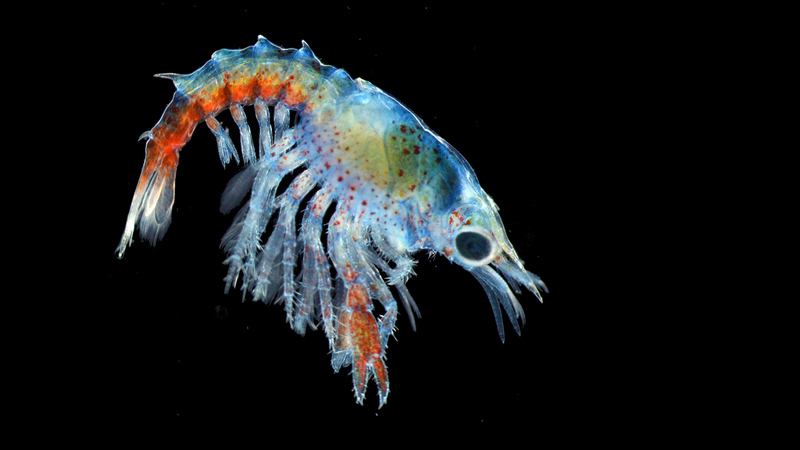
Given these constraints, fishery managers have limited options. One of the most effective tools is to redouble efforts to conserve spawners. Maine’s lobster industry has long embraced this approach through measures such as minimum and maximum size limits, and v-notching, the practice of marking the tails of proven breeders of harvestable size, thereby safeguarding them, even when they’re not carrying eggs. Although environmental variability makes the natural supply of baby lobsters hard to predict, extra protection of mature lobsters is a hedge against losses.
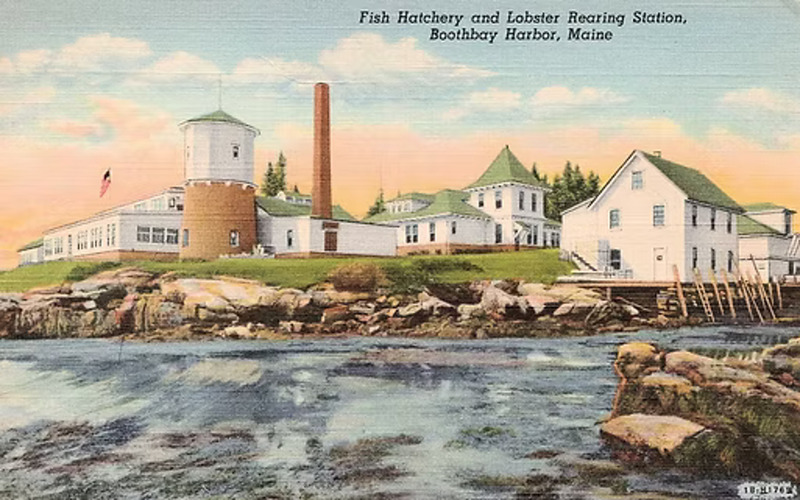
Against this backdrop, the appeal of hatcheries is understandable. Raising lobsters through their most vulnerable early life stages and releasing them into the wild has been explored for over a century in New England and Atlantic Canada. Maine’s Department of Marine Resources laboratory in Boothbay Harbor was first established in 1904 as one of several federal lobster hatcheries in New England. But despite the release of large numbers of larvae, these efforts failed to demonstrate benefits to the fishery. Eventually, many early hatcheries were closed or repurposed.
Interest in hatcheries revived in the 1970s and 1980s when advances in lobster husbandry and technology enabled researchers to raise lobsters from hatch to legal size in captivity in only two years. But due to their cannibalistic tendencies, lobsters require individualized housing, and optimizing growth and survival requires plenty of space, staffing, and heated seawater, putting it economically out of reach to scale up commercially.
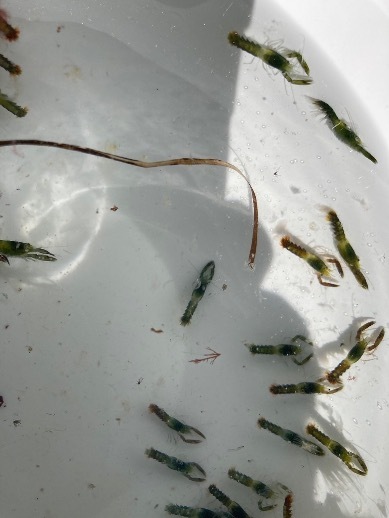
In Europe and the United Kingdom, where lobster populations had been severely depleted and market prices were much higher, hatchery-based stock enhancement received significant funding. Researchers there developed “microwire tags” embedded internally to track hatchery-reared juveniles after release. Despite this noteworthy innovation, survival rates were too low to justify the expense of scaling up, even at high market price.
Learning from the European experience, subsequent field experiments in New England put hatchery enhancement to a more rigorous test. With NOAA support, the University of Rhode Island designed a field experiment with appropriate control treatments to evaluate the joint effects of both habitat and hatchery enhancement. While adding shelter-providing rocky habitat had a positive effect on juvenile numbers, only one of 2,000 tagged, hatchery-reared juveniles was recaptured.
In 2006, to enhance what they saw as underperforming fishing grounds in eastern Penobscot Bay (Maine’s lobster zone C), local harvesters opened a hatchery on the Stonington waterfront. They partnered with Bigelow Laboratory for Ocean Sciences to evaluate the efficacy of releases, comparing experimental release sites to unseeded control sites. The hatchery released over 21,000 early juveniles at sites regularly monitored by divers, and another 80,000 at unmonitored sites in the zone. Despite an estimated mortality exceeding 90% in the first week post-release, they found a positive cumulative effect on population densities at sites the size of a football field seeded over four years. Ultimately, the widespread surge in natural larval settlement along the coast that eventually fueled Maine’s landings boom overwhelmed any measurable effect of the hatchery releases. The facility closed in 2010.
These findings reveal a consistent pattern: while hatchery releases can produce localized, short-term positive effects under controlled conditions, they are not an economically feasible way to enhance lobster populations at the scale required to support Maine’s commercial fishery.
In contrast, conservation measures that protect broodstock have demonstrated long-term effectiveness without resorting to hatcheries. By maintaining a healthy population of spawners, and letting nature take its course, the fishery is better positioned to recover from periods of low production. Maine’s extensive monitoring network provides critical data across multiple life stages, enabling early detection of changes in population dynamics that inform management decisions. By one recent analysis, Maine’s conservation measures enabled it to capitalize on the period of favorable conditions over the past few decades, and may well stave off more severe declines through further conservation of spawners. Toward that end, over the past summer the Maine Lobstermen’s Association launched its “Billion Egg Challenge,” which encouraged more harvesters to v-notch breeders. Meanwhile, continued larval settlement monitoring keeps a finger on the pulse of new babies entering the population each year.
Along the way, a number of small-scale research hatcheries have continued to crop up along New England’s coast, hosted by universities, research institutions, and aquariums. They’ve played a significant role in public engagement, training, and advancing our understanding of environmental and genetic effects on lobster larval development and biology. We strongly encourage reliable tracking of hatchery-reared lobsters in the wild using state-of-the-art tagging or genetic markers, and an experimental design to rigorously assess the impact on local populations. It’s not a trivial undertaking. But despite ever-improving technology, hatcheries are not yet ready to compete with Mother Nature to produce enough larvae to reverse the current population decline.
When larval settlement lags and landings decline, it’s tempting to ask why not be a lobster midwife? Research shows it’s an issue of scale. Proponents of hatcheries must do the math to assess the scale of production and releases required to make a difference within defined areas, using informed assumptions of survival, cost, and benefit. Hatcheries can complement traditional conservation by strengthening research partnerships between scientists, fishermen, and coastal communities while advancing knowledge that supports sustainable fisheries and our working waterfronts. But just like deja vu, the expectation that hatcheries can restore Maine’s lobster fishery remains an illusion.
For an extended, fully referenced version of this article and details on the Billion Egg Challenge, see a new website on the history of lobster hatcheries hosted by the Maine Lobster Community Alliance and Lobster Institute: https://www.lobsterhatchery.info/
Richard Wahle is a former professor of marine sciences and director of the Lobster Institute at the University of Maine. Robert Steneck is professor emeritus of marine sciences at the University of Maine and member of the National Academy of Sciences.