University of Maine student researchers are helping businesses in Bar Harbor, Bath, and South Portland incorporate reusable food containers into their dining experiences to reduce waste, through a pilot program called Reuse Maine.
Participating eateries include Cafe This Way and Coffee Matter/Mother’s Kitchen in Bar Harbor, Solo Pane in Bath, and Second Rodeo Coffee and Verbena in South Portland.
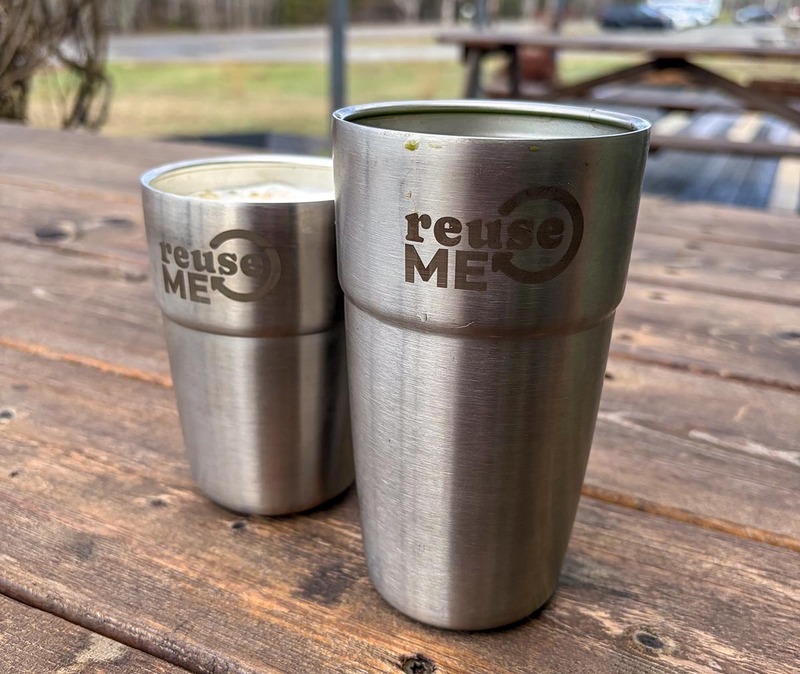
They offer diners the option of getting their food and beverages in returnable stainless steel containers. Customers can check out these containers by signing up for a free account in the Recirclable app, then return them to participating establishments.
By testing the viability of reusable takeout packaging, the students and restaurants are helping develop a model that reduces waste, prevents plastic pollution, and saves local businesses and municipalities money on the purchase and disposal of single-use food and beverage packaging.
The student researchers are working with the businesses to track results and analyze usage patterns to refine the returnable model.
“The driver for this project has been a focus on wanting to maintain and protect Maine’s coastal environment because it’s a very important part of the state’s culture,” said Ryan Kennedy, a University of Maine senior in the Department of Anthropology.
Kennedy, an undergraduate research assistant on the project, has been involved since the initial baseline surveys last June. They noted that the team met with restaurant owners to discuss their establishments’ capabilities and customer habits.
“I think we’re starting to see people realize how easy it is to make more sustainable swaps,” Kennedy said.
In just a little over a month since the Reuse Maine pilot project launched, more than 100 customers across the state have borrowed nearly 500 reusable containers.
As part of an extensive, interdisciplinary effort to mitigate marine pollution, the project is funded by the National Oceanic and Atmospheric Administration (NOAA), Maine Sea Grant, and the Maine Department of Environmental Protection. The support allows the team to tackle environmental challenges while providing student researchers with the resources needed to develop scalable, real-world solutions.