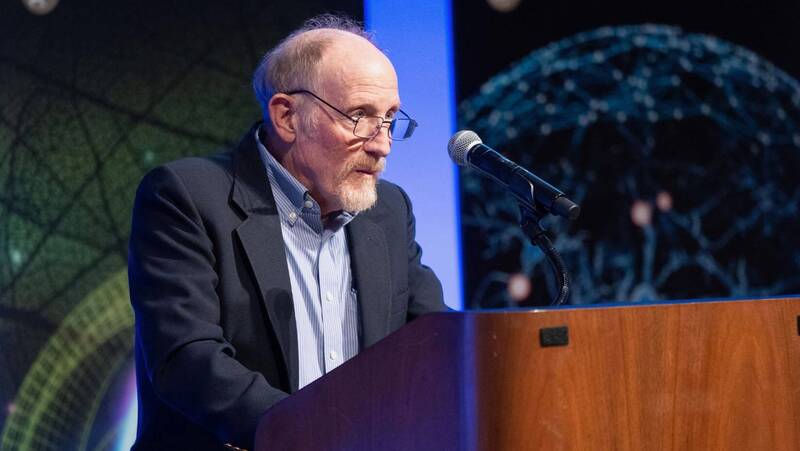
In one of the highest honors in American science, the National Academy of Sciences has elected Robert S. Steneck, a longtime University of Maine marine ecologist whose work has reshaped understanding of coastal ecosystems.
The academy announced on April 28 the election of 120 members and 25 international members, bringing its total membership to 2,705 active members and 557 international members.
Steneck spent more than 40 years at UMaine, where he helped shape marine research and policy through studies of kelp forests, lobster fisheries, and coral reefs. He retired in 2023.
A marine ecologist, Steneck has focused on the structure and function of coastal ecosystems, particularly in the Gulf of Maine and the Caribbean. His research examines food webs, dominant species, and ecological processes in benthic marine environments, often through in situ observation using scuba diving, underwater video systems, and remotely operated vehicles.
His work in Maine has explored kelp forest ecosystems and the relationships among lobsters, sea urchins, and fish stocks.
Steneck joined UMaine in 1982 and was among the first marine ecologists to collaborate directly with lobstermen, integrating scientific research with industry knowledge.
Steneck’s election follows other recent honors, including his 2025 induction into the American Academy of Arts and Sciences.