Imagine: rules for conservation that instead have fostered depletion of keystone species and transferred the rights to use that system to just a few owners. Does this sound like success? Or justice?
A self-congratulatory press release by the National Oceanic and Atmospheric Administration recently heralded the 50-year anniversary of federal fisheries management, “conserving marine resources while supporting fishing communities and a vibrant U.S. seafood economy.” Here in coastal Maine towns, however, many might greet the milestone with a bumper sticker: “National Marine Fisheries Service: Destroying fishing communities since 1976.”
Why the discrepancy?
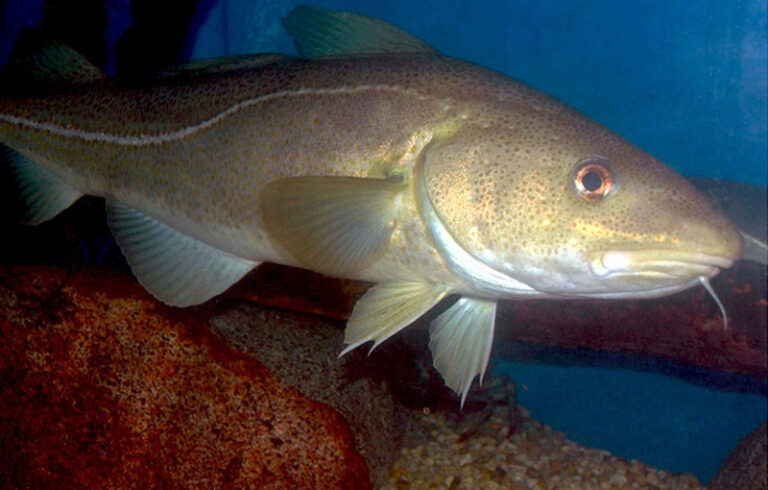
The bumper-sticker sentiment is far more than just whining: federal management has been devastating for two primary Maine fisheries. The state’s storied cod landings have gone from over 9 million pounds in 1977 to 75,000 pounds in 2024, less than 1% of what it was in 1977. In eastern Maine, the groundfish fishery collapsed in the early 1990s and has not rebuilt in 30 years. The herring fishery, the forage fish at the base of the Gulf of Maine food chain, is now 20% of what it was then, when it was already depleted after years of overfishing by the foreign fleets. Region-wide, the track record is virtually the same.
The loss of fish has transformed Maine’s fishing communities now and for the future. As populations fell, federal rules turned fish in the ocean into private property. Like giving public lands in the American West to farmers who staked claims in the 1800s, a share of virtually every future cod, haddock, flounder, hake, pollock, and other groundfish species was given to boat owners based on what they caught during a specific period in the early 2000s, well after fish collapsed off much of the Maine coast.

This approach, dubbed “catch shares,” had long been advocated by economists and environmental groups as a way to allow flexibility and foster stewardship. (“If you own it, you will take care of it.”) Only a handful of Maine-based boats got shares and have survived this system, with help from nonprofits. They often have to lease fish quota from share owners ashore to complete trips. The infrastructure for handling groundfish in the state has atrophied. And if groundfish rebound, it’s unlikely that the small-scale owner-operators in the lobster fishery who would like to diversify will be able to buy into the system.
A tragedy
In reality, the last half-century of fisheries management is a tragedy still unfolding: good people on all sides trying to figure out the restraint that will allow a healthy marine system and healthy fishing communities—and becoming more polarized as the failures pile up.
Never has management been more important. And never has it been more urgent to face the failures and learn from them. Our plastics and synthetics, our powerful diesels, and our sonar and electronics that now let us see the bottom and see the fish. The climate is changing. As the saying goes, “We have declared war on fish … and won.” Maine’s fishing communities hang in the balance.
In 1976, the smart choice seemed to move conservation from a local to a national scale. The Fishery Conservation and Management Act, later called the Magnuson-Stevens Act, was one of the sweeping environmental laws of the 1970s, alongside the Clean Air and Clean Water acts. In addition to excluding foreign fleets from U.S. waters with the 200-mile limit, Magnuson established fisheries management at the federal level for the first time and required that management be science-based. It created an entirely new system of collaborative decision-making through eight regional councils. Ever since, Maine has participated in the New England Fishery Management Council, which covers the coastal states from here to Connecticut.
What’s the problem?
Magnuson was written when fisheries science was shifting from observational ecology to a new, single-species, quantitative approach: Scientists count the cod, tell fishermen how many to catch, and thereby, supposedly, achieve a predictable stock level for cod, and do it again, species by species. This quantitative approach became more rigid after the 1996 reauthorization of Magnuson as the Sustainable Fisheries Act, when the environmental lobby inserted a legal requirement that each species individually be rebuilt within 10 years. Federal scientists and managers are now legally required to predict and produce outcomes. In reality, though, that kind of control by adjusting catch rates is a delusion, aside from the certainty that catching all the fish will crash the stock.
Fifty years of federal fisheries science has developed inside this straitjacket, working to improve the surveys, the landings accounting, and the models, incorporating variables such as climate change, trying to make the prescriptions for each species result in the desired outcome. “It is a story of hubris,” a top federal fisheries scientist told me.
Meanwhile, other marine science has moved on. Stunning advances have been made in the study of currents, ocean chemistry, plankton, larval life stages, and fish behavior. Now it is known that fish, even herring, have local population structure. Large fish teach younger fish where to feed and migrate. Big old fat, fecund, female fish (BOFFFFs) are vital to populations. Foraging differs at life stages and in different locations. This is a system, not a collection of discrete juveniles and adults of each species to be counted like atoms in a physics lab experiment.
The interactions and the challenges are bewildering. No wonder then that in the 1970s the simple, predictive models seemed to be the only way to try to get a handle on fisheries. I was initially a huge fan of Magnuson and the council system and served two terms on the New England council.
Another way
With so many interactions among species, physical parameters like currents and temperature, and human factors, it’s proven impossible to predict the outcome of a given change as Magnuson requires. Prediction problems are not unique to fisheries. A new science has grown out of quantum physics and the development of computers. Complex adaptive systems theory (CAS) is an alternative way to cope with—not control—complex natural systems.
Complex systems are not ungovernable.
They have order, built from the bottom up, like the local populations of cod and herring within the larger population. That order, at multiple scales, is what makes the system so productive. Management’s task should be to protect that order.
This is exactly the path Maine took with its lobster laws. Protect juveniles and large breeders. V-notch breeders. Limit technology to traps only. Limit the geographical mobility of lobstermen. Don’t privatize the lobsters; create an apprentice-based entry to mimic traditional practices. Require owner-operator. And create elected councils of lobstermen who can become partners with state scientists and managers. When Elinor Ostrom won the Nobel prize in economics for identifying principles for successful governance of CAS, she cited Maine’s lobster laws.
Humility not hubris. Investing in local stewardship and shared learning instead of lawsuits. We can only dream.
Robin Alden is a former Maine commissioner of marine resources and a founder of both Commercial Fisheries News and the Maine Fishermen’s Forum.