Public hearings will be held in Maine and several other northeastern states this September to gather input on proposed changes in the management of the Atlantic menhaden fishery. The hearings come before a November meeting by the Atlantic Menhaden Management Board of the Atlantic States Marine Fisheries Commission (ASMFC) to finalize any changes to the management plan.
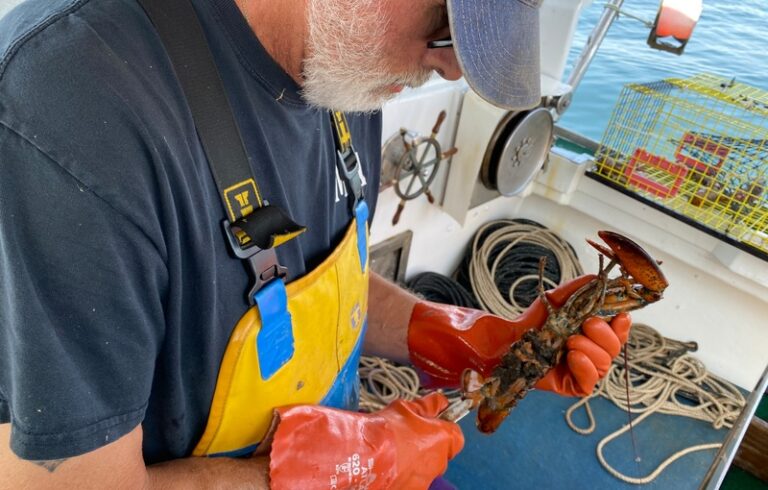
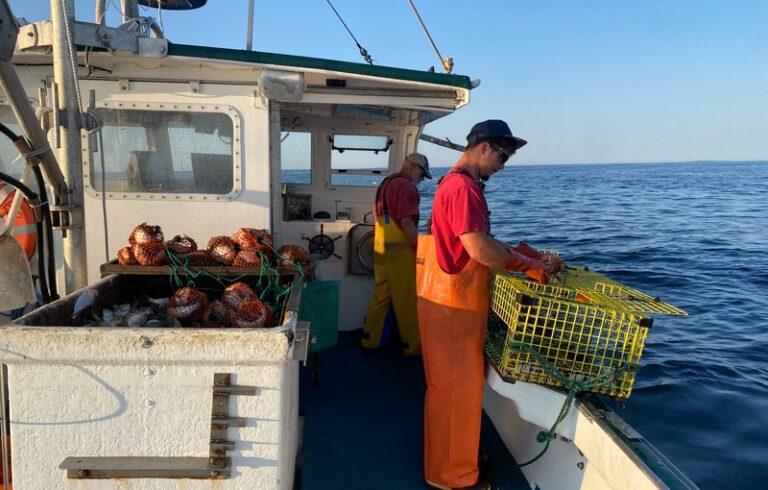
Many commercial seafood harvesters are following the process out of concern that the menhaden fishery could face significant new restrictions. That includes in Maine where they are used as lobster bait. Some advocacy groups, meanwhile, are calling for greater protection of the fish given their importance to other marine species.
Menhaden are most often caught to be reduced to fish meal and fish oil, but they also are considered an important forage fish for striped bass, a valuable species for sports fishing. In addition, the fish have been caught in increasing numbers for bait, and are the third-most valuable fishery in Maine, according to preliminary 2025 commercial landings data from the Maine Department of Marine Resources.
In August, menhaden fishery regulators released a draft plan with proposed management changes in the Chesapeake Bay, where a significant share of the coastwide menhaden harvest occurs. Currently, fishermen are allowed to catch some 51,000 metric tons in the bay annually for the fish reduction industry.
The Chesapeake Bay quota is part of the total allowable catch of 186,840 metric tons for the entire coastal fishery. Among the proposed changes, the board can choose to reduce the bay’s quota by as much as 50%, break up the quota into periods during the fishing season, or tie quota changes to the coastwide catch total.
Separate from this, the board is poised to set the allowable catch for the next one to three years, and is considering whether to significantly reduce the tonnage caught. In 2025, regulators originally proposed cutting the allowable catch by as much as half, but ultimately cut it by 20% for a single fishing season.
The coastal quota is divided by states based on their historical catch totals, and is reconsidered periodically. States can ask for more quota room from other states, if needed. Virginia fishermen received 75% of the state-by-state quota, while Maine fishermen received 4.8% of the quota.
The proposed changes in the management plan come even as regulators acknowledge that Atlantic menhaden currently aren’t overfished. ASMFC data shows that the menhaden mortality and reproduction rates are between the benchmarked threshold and the benchmarked target for long-term sustainability.
But menhaden numbers are not managed in isolation. Instead, they are managed as part of a bigger picture as a forage fish for striped bass, bluefish, and osprey, among other species. Striped bass, a focal species for regulators to consider, are currently classified as overfished by ASMFC.
Regulators also cut the coastal allowable catch for the latest fishing season, in part because it was discovered that scientists had substantially overestimated the biomass of menhaden.
While the Chesapeake Bay is a vital fishing grounds for menhaden, there is little data available specifically about the fish’s reproduction and fishing mortality rates in the bay, says James Boyle, an Atlantic menhaden fishery management plan coordinator for ASMFC. Regulators work with the information available about menhaden and the species that prey on them to set quotas for the bay, he said.
“The Chesapeake Bay cap is precautionary,” Boyle said. “We don’t have enough data right now to make an assessment that’s spatially explicit to just the Chesapeake Bay.”
Broadly speaking, conservationists and recreational outfitters favor reductions in the total allowable catch and changes in the way the reduction fishery is managed in the Chesapeake Bay. The reduction fishery opposes changes to the bay management plan, while bait fishermen have spoken out in the past against a coastwide catch reduction.
In October 2025, Patrice McCarron, executive director of the Maine Lobstermen’s Association, wrote a letter to ASMFC in opposition to a then-possible 55% reduction in the total coastal allowable catch, saying such a cut “would disrupt bait access and eliminate an important supplemental income stream for lobstermen during slow lobster periods.”
In Maine, where menhaden have become an important source of lobster bait when herring are in short supply, state legislation was recently passed that eased some requirements for fishing them.
Ocean Harvesters, which operates a Virginia-based fleet of vessels that catches some 156,000 metric tons of menhaden, believes ASMFC should not be making changes to the bay’s management plan without more data. Through a spokesman, the fishing company argued that ASMFC is setting policy without “a single shred of Bay-specific information” on the fish and is “moving forward based upon anecdotes.”
In October 2025, the Menhaden Fisheries Coalition (MFC), of which Ocean Harvesters is a member, celebrated new scientific study efforts the Coalition says will fill in the knowledge gaps about menhaden in the bay.
However, conservationists call into question the impartiality of this research effort, and argue fishery management must work with the information on hand.
Jaclyn Lunaas, a forage fisheries manager with the Theodore Roosevelt Conservation Partnership, said the Coalition has lobbied against funding for past research efforts to understand the impact of menhaden harvest on the bay. She added that enough is known about the Chesapeake Bay to know action is needed to maintain the health of menhaden and other species.
“It’s a huge nursery area for the entire Atlantic coast,” Lunaas said. “And we’re just hammering the bay, and we’ve been hammering Virginia waters for decades on decades.”
Lunaas argued that industries often call for more data when asked to consider conservation measures, but ocean fisheries management must work within the limits of what is known below the surface. To do otherwise is shortsighted for both conservation efforts and the industry, she said.
“If they want to have a fishery for the next 50 years, they need to get serious about where the fishery is going,” she said. “We can’t just stick our heads in the sand.”
ASMFC will host a virtual meeting on the proposed changes in menhaden fisheries management for interested parties in Maine, New Hampshire, Massachusetts, and Rhode Island on Sept. 29. For more information or to register, click here.