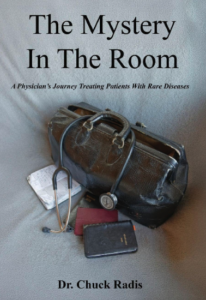
The Mystery in the Room: A Physician’s Journey Treating Patients with Rare Diseases
By Dr. Chuck Radis (2025, Sakamo Press)
I have enjoyed reading, and reviewing, two previous books by Dr. Chuck Radis, D.O., a longtime resident and once the practicing physician on Peaks Island. His previous works, Island Medicine and Go By Boat, introduced readers to his wife and two daughters, the challenges of island life, and treatment of island patients, including many colorful characters.
Radis considers this newest book, about rare immune system disorders, “a reflection on the dance practitioners and their patients engage in as they navigate uncertainty. Arriving at a specific diagnosis in uncommon diseases takes time, persistence, and may require referrals to multiple specialists.” It begins after a year in which Radis left Peaks to study rheumatology as a specialty. It also focuses again on family and island life.
If you are a susceptible person who responds to definitions of illness by believing you share the symptoms, this book may not be for you. But understanding more about how doctors think and work with patients has appeal. Radis could have titled this book “The Third Person in the Room,” as he gives an inside look at approaches to healing. It’s very informative.
If you’re curious about the nuts and bolts of doctor-patient interaction, Radis recreates conversations that reveal the state of patients—usually in pain—and his process of trying to diagnose and treat illnesses in the most helpful, respectful, and empathetic way possible. Treatment can involve tests, consultations, and digging up medical history—and it usually doesn’t bring quick or easy answers.
Radis draws readers in, telling his story with a folksy tone and humble persona. He provides humorous anecdotes to demonstrate his shortcomings, and describes his not-fancy lifestyle on Peaks. Even though doctors are authority figures entrusted with saving lives, he is not burdened with a big ego. I think he’s a “regular guy.”
Radis has a good eye for fascinating details and appreciates action-packed stories. There’s a nail-biting chapter on his own near-death experience and dramatic rescue while spending a day skiing on Mount Washington. Despite it being spring, it felt like winter as his group began ascending. Just as they were finishing up, Radis lost his footing and tumbled into a fast-moving stream of water that carried him along, weighed down with boots and backpack, until he finally stopped, pressed against some boulders. His friend waded in and was able to bring him out to where a treaded vehicle could reach them. Then he was ambulanced to the North Conway hospital, in pain from a dislocated shoulder. The longest-lasting impact was post-traumatic stress disorder, which included recurrent nightmares, panic attacks, and a fear of darkness, tight spaces, and being alone. Now, Radis says, he appreciates that his experience provided greater understanding of others with PTSD.
He also shares some concerns. He is wary of addictive opioid painkillers and sometimes questions the decisions of other providers who have prescribed them to his patients.
He realizes people with opioid use disorder who are refused by him will keep hunting for other doctors to try. Radis also sees many patients asking if they have specific conditions, and he feels frustrated that some patients require certain diagnoses in order for their insurance to cover treatment. While a refusal can disappoint the patient, the process is also hard for him as the doctor.
You can find Radis’ books in independent bookstores around Maine and also online. Each of these three books can be read as a stand-alone. I’m already looking forward to his next.
Tina Cohen has been an educator, librarian, and therapist, and spends most of the year on Vinalhaven.