Similar to doctors, researchers know that to combat climate change they must first do no harm.
That’s why for the next two years researchers with the Woods Hole Oceanographic Institution (WHOI) in Massachusetts will be testing in a lab whether reducing the acidity of ocean water could harm larvae of American lobster and tautog fish.
The project recently received $300,000 in funding from the Prince Albert II of Monaco Foundation. It was one of two proposals funded through the foundation’s Carbon to Sea initiative, which encourages research on ocean alkalinity enhancement (OAE). That is the process of adding alkalinity to waterways to increase their ability to lock in carbon and lower acidity.
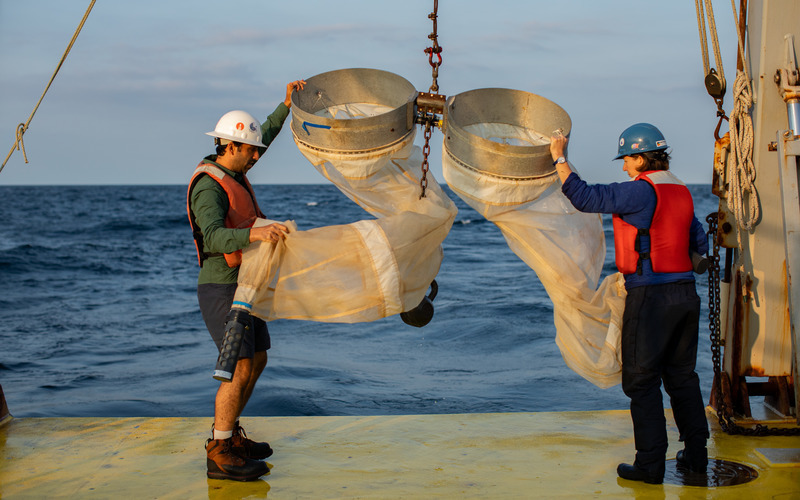
Adam Subhas, a WHOI associate scientist in marine chemistry, is leading the research effort. It builds on his work conducting the first large open-water field test of OAE using sodium hydroxide, or lye that is commonly added to drinking water to adjust pH. For six hours in August 2025, Subhas and his team dispersed lye in the Wilkinson Basin, a section of the Gulf of Maine that’s off the Massachusetts coast.
The project is one of many new efforts by scientists to mitigate the harm caused by greenhouse gases that have built up in the atmosphere over the last few centuries due to human consumption of fossil fuels. And while its findings won’t be ready for a while, at least some members of the New England fishing community have credited the researchers with considering their input as the project has moved along.
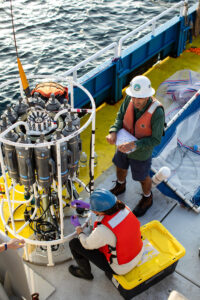
About a third of the carbon dioxide in Earth’s atmosphere has been absorbed by the ocean, which has reduced the pH of ocean water and caused increased acidity. More acidic water can decalcify coral, damage fish shells, and hinder the ocean’s ability to take up more carbon in the future.
This new method for enhancing ocean alkalinity has the potential to store carbon in a stable form for thousands of years, Subhas said.
“This basically turns that atmospheric carbon into this stable form of bicarbonate, which is essentially dissolved baking soda,” he said.
During the testing in the Gulf of Maine, researchers distributed the lye and a red tracer dye to study how it dispersed, then measured the pH balance of the area for five days. They also observed sea life in the vicinity.
Using remote sensors and autonomous vehicles, the researchers found that the dispersal lowered the acidity in the area and had no significant biological impacts on the organisms there. Long-term measurement of the beneficial effects of that small release of lye is also possible, according to Subhas.
“That alkalinity that we added was still taking up carbon and will still take up carbon for about a year,” he said. “Even very, very small changes in this buffering capacity can help the ocean to take up more CO2 over time.”
Now researchers want to more deeply understand the effects of releasing the sodium hydroxide on marine organisms, and to do so without risking important fisheries. That’s where the new lab study comes in, Subhas said.
The WHOI research effort is dubbed the LOC-NESS (Locking Ocean Carbon in the Northeast Shelf and Slope) project. It is one of several projects to study the effectiveness and viability of OAE efforts around the world.
While LOC-NESS is research-focused, some other efforts are commercially based, seeking to cash in on the carbon credit trading market. One such effort, the Nova Scotia-based Planetary, is testing the effectiveness of adding an alkaline slurry to an outfall waterway in Halifax. The company declined to comment for this story.
Adding trace alkaline materials is just one way to combat the rising acidity of the oceans, according to Parker Gassett, an assistant director of the Maine Climate Science Information Exchange, based at the University of Maine’s Climate Change Institute in Orono. Many beneficial OAE efforts, like oyster reef restoration, can sound less sci-fi than the WHOI project and have stirred up less controversy among fishing communities.
Strategies to combat climate change are shifting as the concentration of carbon dioxide in the atmosphere climbs. Whereas before the goal was focused on reducing carbon emissions, now climate and marine researchers are beginning to advocate for measures to remove carbon from the air.
“We’re starting to look at the Earth like it’s a fishbowl and a terrarium, and we think we might have the smarts to take care of it,” Gassett said. “But not everyone’s so confident playing the role of the tinkerer.”
Such direct measures to combat climate change have raised alarm among some stakeholders in the New England fishing community, according to field interviews conducted by Brown University undergraduate researcher Ashley McKinnon in collaboration with the Fishery Friendly Climate Action Campaign.
During a public comment period before the WHOI field test, fishery representatives expressed concern that OAE could further stress species that already face various challenges. Some asked that the field test be scaled back or cancelled in favor of lab testing, McKinnon reported. Many fishermen worried this would be a redo of their experience with offshore wind projects, where they felt shut out of the regulatory process.
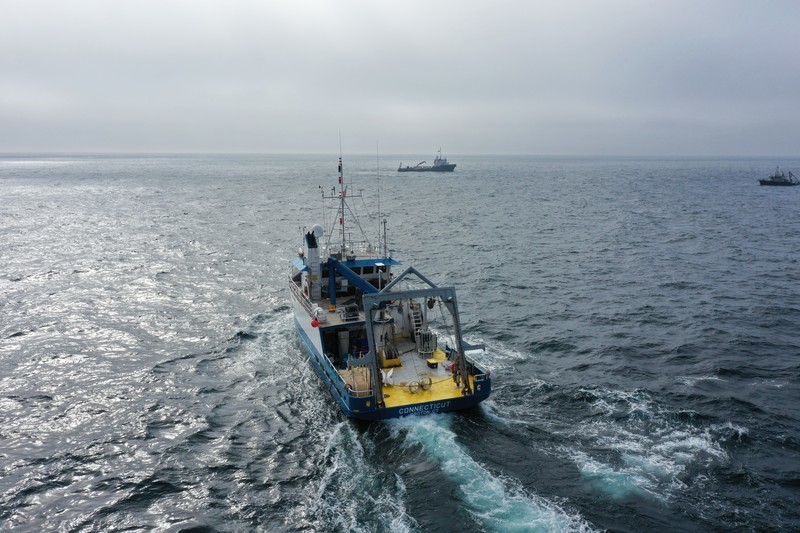
“From my interviews, it seems that fishermen are scarred from their experiences with [offshore wind] and have lost trust in governance structures,” McKinnon said during a podcast for the campaign.
Katie Almeida is one of those concerned about fishing communities being shut out of future carbon capture efforts. Almeida, senior representative for government relations and sustainability at The Town Dock, a Rhode Island fishing wholesaler, said efforts to include the seafood industry in offshore wind projects have felt perfunctory, and fishermen and wholesalers need a full say on future projects.
“For carbon reduction projects, that whole sector, we need to be at the table at the beginning, not once the project is approved and the site is already planned,” Almeida said.
Ben Martens, executive director for the Maine Coast Fishermen’s Association, was one of those who was skeptical when he first heard about Subhas’ OAE research project. However, Subhas has done all the right things to assuage community skepticism, Martens said on the association’s podcast.
“Adam was really good at communicating the risks, the opportunities, and the thoughts behind what was happening with the oceans, this project, and, ultimately, what we should anticipate around this type of work in the Gulf of Maine.”
It is understandable for New England fishing stakeholders to be skeptical of new efforts to combat climate change, said Susie Arnold, senior ocean scientist at Island Institute, which publishes The Working Waterfront.
However, Arnold argued that collectively not enough has been done to reduce carbon emissions, which leaves humanity scrambling to find new ways to store existing atmospheric carbon.
“If we don’t want to do the things we know work, which is burning fewer fossil fuels … we have to try other things,” Arnold said. “It’s a horrible spot to be in.”
For his part, Subhas doesn’t want to set unrealistic expectations about OAE efforts. He’s simply trying to see whether it has the potential to mitigate the effects of climate change.
“I’m not going to say that this is going to be the silver bullet that’s going to solve our climate problems,” Subhas said. “It’s going to be one potential approach to help us meet these challenges.”