
Maine’s island and coastal communities regularly grapple with climate and economic issues that originate from beyond their shores. At Island Institute, we have long believed that government can play an important role in helping small towns navigate these changes. Our approach is to work closely and collaboratively with State and Federal agencies, elevating common issues we see across our day-to-day work, advocating for specific projects, and helping local partners navigate roadblocks. With our agency partners, we also help translate information and explain projects to community leaders, we advocate for funding key programs, and play the role of thought partner in how agencies can better serve the places we care about.
The relationships that our teams have with agency staffers and leadership are critical to our work, and our policy team spends a fair bit of time ensuring these relationships remain strong. As we look to the coming year, we know Maine will have a new Governor, new State agency leadership, and a new US Congressional Representative. At least 25% of the State legislature will be new. With more offices up for election, there may be incumbents who lose their race. All of these changes mean that we will likely have to introduce Island Institute, our work, and the projects we are working on with community partners to a whole new set of policy actors.
In Maine, the communities we work with have benefited from a close working relationship with State agency staff. Below is an overview of our teams’ work over the past 6 months.
at the STATE LEVEL:

Island Institute is helping to inform how the State is approaching permitting for piers and wharves. We partnered with the Department of Environmental Protection to convene engineers, municipal officials, working waterfront owners, partner organizations, and state agency staff from various agencies with regulatory and permitting jurisdiction over the working waterfront. This group identified the very real challenges in the permitting process, places where guidance could be clearer, and potential regulatory or statutory changes to make it easier for working waterfronts to become more resilient.
Island Institute convened the Maine Islands Coalition and the Maine Island and Coastal Housing Coalition in Augusta to meet with key agency staff leading state policy on housing. Together we discussed updates on current programs and addressed specific challenges facing smaller and more remote communities.
We raised the concern that many of the scientific research and data streams that the Maine Climate Council uses to monitor and assess the impacts of climate change on the State are at risk to changes in the federal funding landscape. We have partnered with the Office of Policy Innovation and the Future to find funding that will allow the Climate Council and the Science and Technical Subcommittee to track these changes.
At the FEDERAL LEVEL:
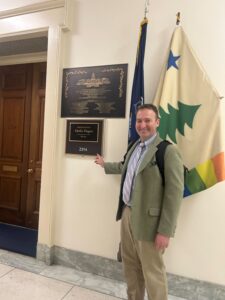
We continue to work closely with the Department of Energy and various national labs on the Energy Technology Innovation Partnership Program. Island Institute is one of nine regional partners, and funding for this work has been one of our top federal policy priorities. Since 2018, we have led the coalition advocating for this work—driving nearly $65 million to support island and remote communities as they face complex energy challenges. We also help other regional partner organizations educate and inform Members of Congress about the important work this program enables, in order to broaden Congressional support for this funding.
In recognition of the vital role NOAA funding plays in Maine—from helping us monitor and understand changes in the Gulf of Maine ecosystem and manage our fisheries to strengthening the resilience of working waterfronts and coastal communities against climate change—Island Institute is increasing our efforts to ensure Mainers recognize the value and importance of NOAA funding. We are doing this through our science communication channels. Much of this funding remains unseen, yet it provides essential support for Maine’s coastal communities.
As we prepare for upcoming political changes and address the needs of Maine’s island and coastal communities, we remain dedicated to working closely with State and Federal agency partners and our elected officials. Although the challenges may be substantial, we believe that communities can overcome them by working together.