In New England, early March brings many things—the deceptive warmth of false spring, the welcome return of sunlit evenings, and the sweet work of maple sugaring season. But for many on Maine’s coast, the start of March heralds something else: the Maine Fishermen’s Forum.
Every year, the fishermen, sea farmers, regulators, suppliers, researchers, and many others who make up our vibrant marine economy gather in Rockport for the Maine Fishermen’s Forum. It is one of the only times each year that people who work on the water come together from across Maine’s 3,500 miles of coastline in one place. Over its 51-year history, the forum has created a space for Maine’s often rural working waterfront communities to trade knowledge and strengthen relationships.
Island Institute co-planned and facilitated two sessions at this year. We asked our programs staff to reflect on the conversations, lectures, and lessons of this year’s forum. Here’s what they had to say:
Kristin Garabedian, Community Development Officer
One of the annual highlights of the forum is the announcement of lobster landings from the previous year. The much-anticipated landings came in at 78.8 million pounds, with a commercial value of over $461 million—far larger and more valuable than all other fisheries in the state combined. And while these landings have continued to decline from the record highs of the past decade, fishermen aren’t surprised.
Across the state, many have shared that they noticed colder water temperatures than what we’ve had in the Gulf of Maine for much of the past decade, and that lobsters shed their shells later in the season. Both patterns were similar to what the fishery experienced in 2024.
However, the overall economics of the fishery don’t always tell the whole story. The average price across the state for 2025 was high at $5.85 per pound, but there was significant variability during the fishing season. Most fishermen agreed that the economics of the fishery are getting harder—rising costs for bait, traps, equipment, and fuel are putting pressure on the thousands of small businesses that each boat represents. For some fishermen, catch was steady and the price they received was pretty good.
Success stories highlighted the importance of building relationships that have led to research projects advancing both lobster science and industry understanding.
Others shared that their landings were down about 30%, and their price was volatile. The opportunity to have so many conversations with fishermen about their individual experiences over the past year has underscored the importance of our community-based work that allows us to support our diverse fishery.
At the forum, federal right whale protection regulations remained at the top of everyone’s mind––especially as we move closer to new regulations being developed to go into effect in early 2029. With federal and regional regulators in attendance, industry members could speak to them directly about their concerns and ask questions.
I also noticed a common theme that underscores the importance of the Fishermen’s Forum: collaboration between scientists and fishermen. I heard about new and expanded lobster data collection shared by Maine DMR, specifically coming from the requests and observations from fishermen. Success stories highlighted the importance of building relationships that have led to research projects advancing both lobster science and industry understanding.
The Fishermen’s Forum is an opportunity to come together and ask the questions on the minds of researchers and fishermen alike about what comes next. It spotlighted not just the “what,” but more importantly the “how” of this collaborative work—how to bring people together to build trust and partnerships in service of knowledge, resilience, and a sustainable future. This rings true to our work at Island Institute.
 Olivia Richards, Community Development Officer
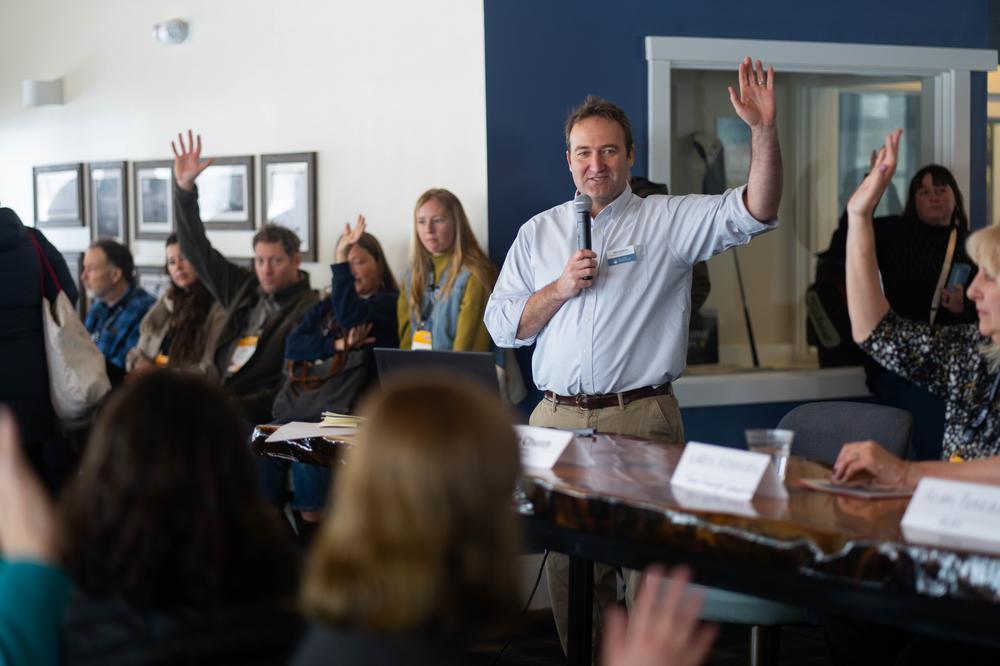
On Friday morning, Nick Battista, the chair of the Maine Working Waterfront Coalition and Chief Policy and External Affairs Officer at Island Institute, moderated a session titled Funding, Tools, and Programs for Maine’s Working Waterfronts. This session was planned and hosted by the Maine Working Waterfront Coalition, a statewide, nonpartisan collaboration of 22 public and private marine sector partners. The Coalition was created in 2006 to address the growing problem of losing working waterfront along our coast.
Twenty years later, Maine is still experiencing the challenges and pressures that drove the founding members to create the Coalition: growing development interest, loss of coastal access through the conversion of working properties to non-working uses, and aging infrastructure. The session was standing room only—an indication of how many Mainers care about and touch working waterfronts in their day-to-day.
Attendees heard four presenters share their experiences—challenges, lessons, and wins—navigating municipal planning, funding infrastructure, and preserving coastal access for the long-term resilience of working waterfront. Presenters included Jessica Gribbon Joyce of Local Catch Network, Adam Pereira of Maine Coast Heritage Trust, Karen Reddersen of the town of Southwest Harbor, and John Church of the town of Jonesport.
The session was standing room only—an indication of how many Mainers care about and touch working waterfronts in their day-to-day.
Time was set aside after the presentations for attendees to connect with the presenters, Coalition members, and others in the room. The intense buzz in the room after the session concluded reflected the momentum that continues to build in this industry. If you want to stay up to date with working waterfront happenings in Maine and participate in ongoing conversations, join the Working Waterfront Listserv. The session slide deck is available here.
On Friday afternoon, Roxanne Tolman, the Finance Manager at Vinalhaven Fisherman’s Co-op and Christa Thorpe, a Senior Community Development Officer at the Island Institute, took to the front of the Golf Club to host the second annual Maine Fishing Co-ops Roundtable. Each of the 15 fishing co-ops in Maine were represented in the room by fishermen, co-op members, board members, managers, and/or bookkeepers, as well as other groups interested in learning about opportunities to offer capacity and expertise. The session brought folks together to discuss topics uniquely relevant to Maine’s lobster fishing co-ops, continue communication, and build connections across the coast.