Published by Mount Desert Islander on June 2, 2026.
BAR HARBOR — A major research collaboration between College of the Atlantic, the University of Maine, Maine Sea Grant, and Island Institute is bringing new attention to the creative ways women along Maine’s coast are adapting their marine livelihoods amid rapid environmental and economic change. The partnership’s work is featured in Island Institute’s new season of From the Sea Up, a podcast series titled Everyday Adaptation.
Funded in part by a NOAA Climate and Fisheries Adaptation grant, the project examines how fishermen and coastal businesses are responding to shifting conditions in the Gulf of Maine. The collaboration brings together researchers, oral history practitioners, students, and community partners to document on‑the‑ground strategies that are often overlooked in policy conversations.
Dr. Hillary Smith, research affiliate and incoming visiting professor of marine studies and blue food systems at COA and research assistant professor at University of Maine, serves as the project’s principal investigator alongside co‑PIs Dr. Josh Stoll of UMaine, COA professor Dr. Todd Little‑Siebold, Natalie Springuel ’91 of Maine Sea Grant, Galen Koch, COA adjunct faculty member, and Dr. Laurie Baker of Bates College. Koch is the executive producer of the podcast, with Smith serving as assistant producer.
“Adaptation is already happening in small, everyday ways along the coast,” Smith said. “Women working on the water are developing practical solutions through experience, community knowledge, and experimentation. By documenting these stories, we hope to support policies that reflect what’s working on the ground.”
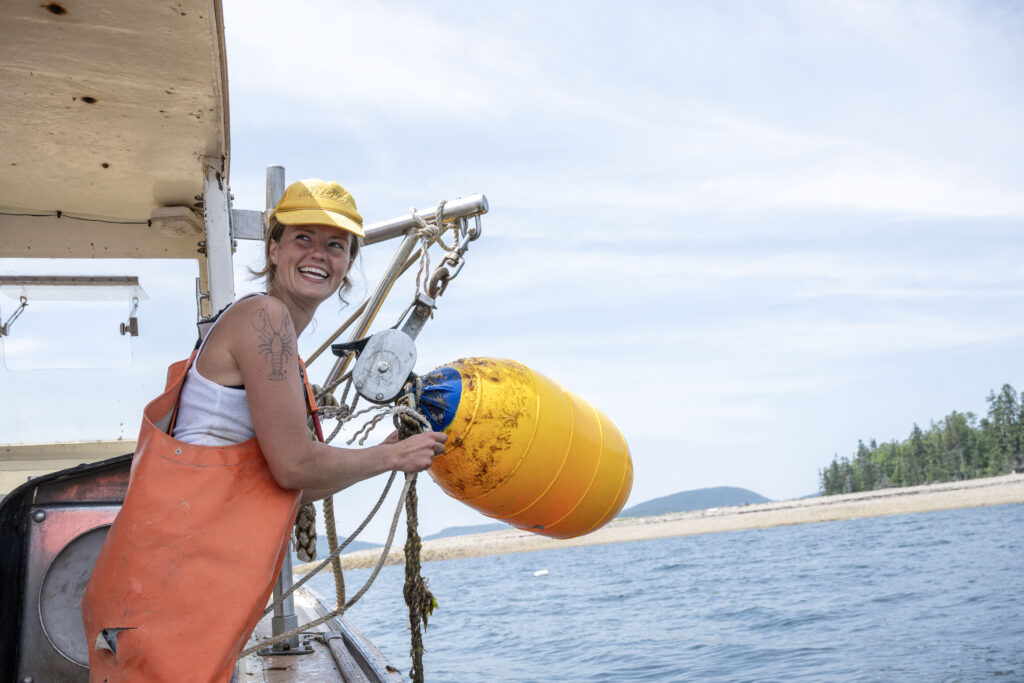
The first episode of the series, “Diverse Species,” features seventh‑generation fisherman Emma Fernald of Bay Lady Scallops on Little Cranberry Island and Krista Tripp of Aphrodite Oysters in Owls Head. Both women are diversifying their fishing practices to strengthen their businesses as warming waters reshape the Gulf of Maine.
A model for regional collaboration
The project represents a growing network of coastal research partnerships in Maine. COA, UMaine, and Maine Sea Grant have collaborated for years on fisheries research, oral‑history work, and community‑based climate adaptation. Island Institute’s staff bring deep relationships in coastal communities, expertise in issues impacting Maine’s coast, and experience in coastal storytelling and community engagement.
“This collaboration brings together academic research, community knowledge, and high‑quality storytelling,” said Koch. “It’s a way to make complex environmental change accessible and grounded in real lives.”