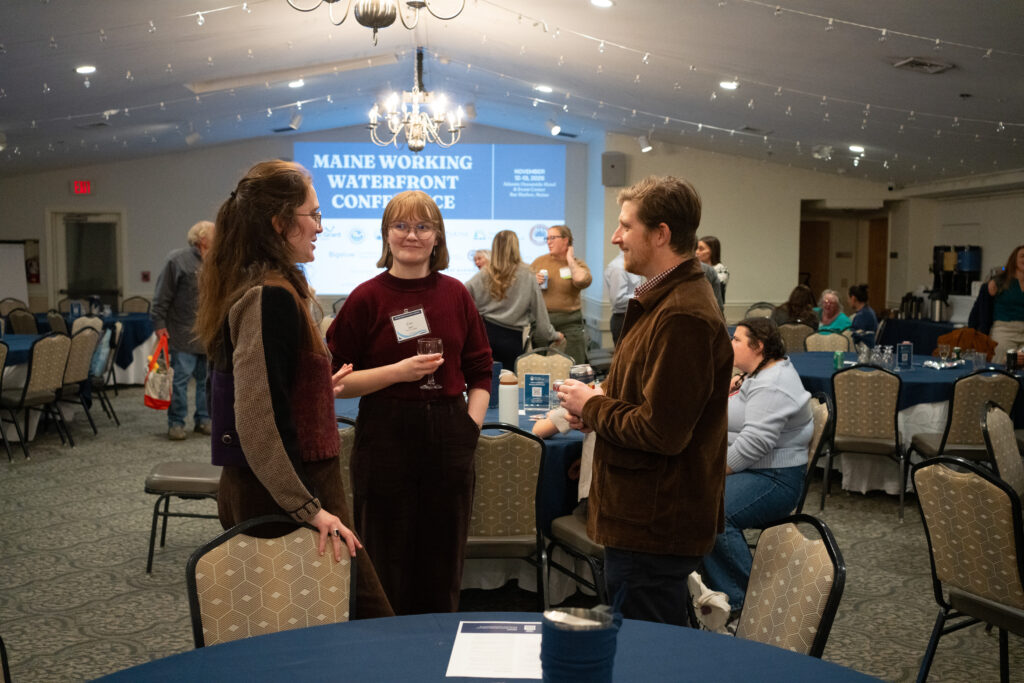
It’s the Monday after the first ever Maine Working Waterfront Conference and the excitement from last week is still buzzing in my brain and inbox. I lead Island Institute’s working waterfront initiative, which ensures access to and builds resilience of working waterfronts for Maine’s fishermen, harvesters, and marine businesses. Over the past nine months, I served as a member of the planning committee for the inaugural conference, which took place on November 12 and 13 in Bar Harbor, and focused on the critical role working waterfronts play in Maine’s economy, identity, and heritage.
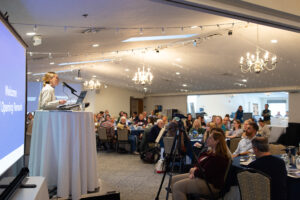
I want to start my reflections of the conference by thanking everyone who played a part in making this incredible event happen. Bringing 200 people together under one roof, and many more virtually, to discuss the physical, social, and economic infrastructure that sustains one of our state’s heritage industries is a noteworthy milestone. It was a special moment, looking out from the podium and seeing the many familiar faces of people dedicated to preserving the longevity of Maine’s marine economy and its communities—because, along our coast, they are inseparable.
From the first morning of the event to the field trips that concluded the second day, the energy was palpable. I could see and hear that people were excited to be together for a dedicated chunk of time to discuss these topics, which, for many attendees, is not only a job, but their way of life. To my knowledge, as a state, we have never brought this many people together for this amount of time to focus solely on working waterfronts, and let me tell you, a lot of people were both shocked by this and thrilled to be a part of it!
It was particularly noteworthy that this historical gathering took place in Bar Harbor. It’s the hometown of planning committee leader and long time (25 years!) trailblazer in this space at Maine Sea Grant: Natalie Springuel. Many attendees voiced appreciation that the event was hosted in Hancock County, which is off the beaten path for many similar past events. Location has always been a priority for the planning team, and we were glad that sentiment was shared by others.
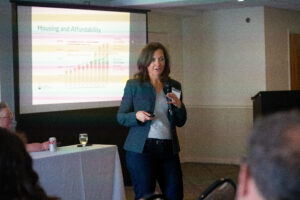
The narrative that working waterfronts are systems, rather than just a single wharf or property, was a theme that underpinned many of the sessions and conversations. The panel discussion, Housing Solutions in Working Waterfront Communities, was an opportunity to dive into this theme, offering attendees the chance to see the marine economy through a lens of housing challenges and gentrification. Often siloed in state programming and initiatives, the reality is that these issues are intrinsically connected and should be addressed accordingly. This panel was a great first step. Island Institute’s Amy Grommes Pulaski is focused on this intersection and was instrumental in planning this panel, along with Maine Coast Fishermen Association’s Emerson Goodrich. Read more about coastal housing and affordability in Island Institute’s Waypoints publication.
Although publicly owned and privately owned working waterfronts are inherently different due to their ownership, many coastal communities rely on both because they meet different needs. As of 2006, when the last statewide inventory of working waterfronts was completed, 57% of working waterfront sites were privately owned. Yet, funding and other resources dedicated to working waterfronts are disproportionately available for public entities.
In acknowledgment of this disparity, the Working Waterfront Advisory Council meeting on the second day of the conference held space for discussing future funding needs, as part of a larger conversation about priority areas for the Council and other groups to focus their efforts on heading into the new year. The Council will meet once more in 2026 and submit their report to the legislature in February. To read more about the Council’s work and see their meeting schedule (meetings are open to the public), visit their website.
The original goal of the Conference was to coalesce industry knowledge and experience to share progress, brainstorm solutions and collaborations, and propel identified actions forward. I believe we are well on our way to achieving this, and the planning team is poised to keep us moving in the right direction. We are dedicated to creating a comprehensive document summarizing the event, key takeaways, and next steps for topics covered at the Conference. The Sense of the Conference report will be available on the conference website in March.
The Maine Fishermen’s Forum, taking place on March 4–6 in Rockport, is another chance to re-engage with many of the conference attendees and a great venue to continue moving these conversations forward. The Working Waterfront Coalition plans to host a working waterfront session at the Forum. We hope to see you there!
The Conference was supported by funding from the Governor’s Office of Policy Innovation and the Future’s NOAA Climate Resilience Regional Challenge Grant award and our many generous sponsors. My fellow planning team members include Natalie Springuel, Annie Fagan, and Kathy Villarreal from Maine Sea Grant; Monique Coombs and Emerson Goodrich from Maine Coast Fishermen’s Association; Harriet Booth and Melissa Britsch from Maine Coastal Program; Katrina Armstrong from University of Maine MARINE; and Tora Johnson and Ari Tickner from Sunrise County Economic Council.