Published by Penbay Pilot on September 26, 2026.
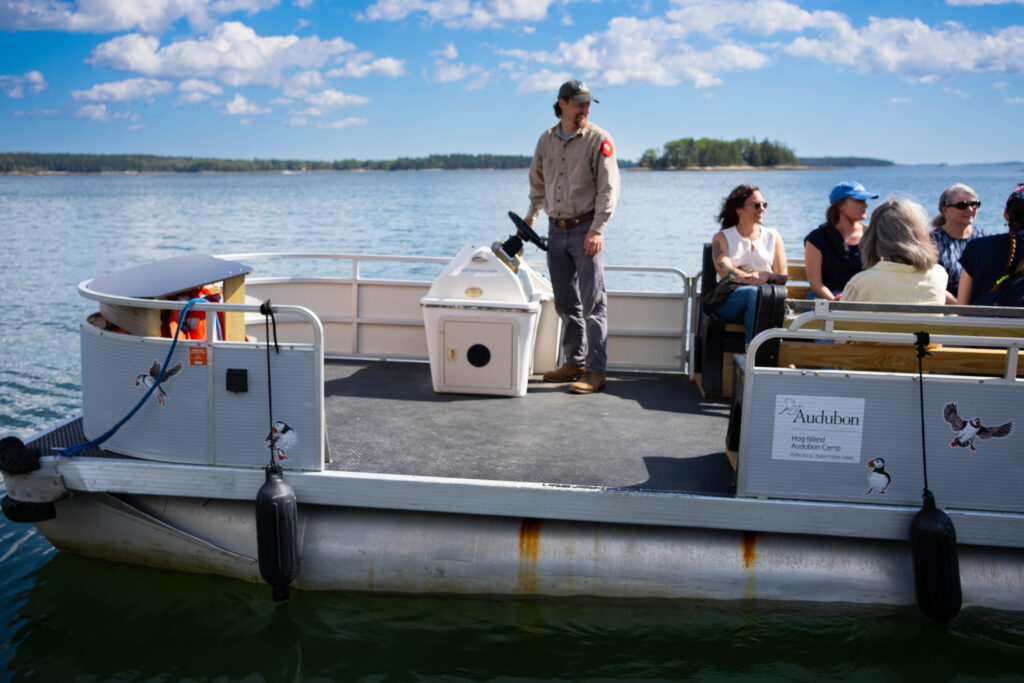
A new electric-powered boat at Hog Island Audubon Camp is putting coastal resilience into practice, demonstrating how clean energy can support the people, organizations, and ecosystems that make Maine’s coast thrive, according to a news release. This vessel is the first fully electric passenger boat in National Audubon Society’s fleet.
The National Audubon Society’s Seabird Institute, Island Institute, and ePropulsion, through its North American distributor Mack Boring & Parts, Co., have launched a refurbished pontoon boat powered by a 20-kilowatt ePropulsion X20 electric outboard motor at Hog Island Audubon Camp in Bremen.
On Sept. 18, Island Institute and its partners brought together funders, state and local leaders, energy utilities, nonprofit organizations, and other stakeholders at Hog Island to see the boat in action, build awareness, and grow support for electric marine propulsion.
The vessel transports people and supplies between the mainland, Hog Island and other coastal research operations from April through October. On busy operational days, the boat could make more than 25 round trips between Hog Island and the mainland.
“Hog Island is becoming Audubon’s model for understanding environmental change and developing adaptation and resilience solutions,” said Laurie Bragg, Center Director for Audubon’s Seabird Institute. “It takes partnerships, expertise, creativity, and a willingness to invest in climate-friendly solutions to achieve a more resilient future. This investment from Island Institute and ePropulsion not only allows us to reduce our footprint, but it provides an opportunity to educate campers from across the country about coastal resilience.”
For 90 years, Hog Island has been a place where people come to experience and learn about the Gulf of Maine. As the National Audubon Society’s only residential camp facility, it brings together hundreds of campers, volunteers, researchers and other visitors each year to learn about conservation, ornithology, ecology and the natural world.
Now visitors have the opportunity to experience the benefits of electric outboards firsthand. Electric propulsion is significantly quieter than a conventional gasoline-powered outboard, reducing engine noise in an area used for wildlife observation and research. For Hog Island, the transition is also expected to save thousands of dollars in gasoline and future maintenance costs, while also reducing carbon emissions.
“For more than five years, we’ve worked alongside Maine’s commercial boat operators to prove that electric propulsion can hold up on a working waterfront,” said Lia Morris, Senior Community Development Officer at Island Institute. “Hog Island gives us a chance to bring that same work into a new setting and show just how many ways this technology can support coastal operations. The case for clean, quiet boats keeps getting stronger.”
Read more (You may encounter a paywall).